

It is an important part of engineering design to select suitable automotive connectors for high-voltage new energy vehicles (NEVs) in 2026. When the battery system voltage exceeds 800 V and the charging power reaches more than 350 kW, improper selection of connector specifications will directly limit the overall performance of the system and may cause safety hazards and quality risks. The following guidelines systematically sort out the key factors that need to be paid attention to in the selection process, including protection level ( IP level ), rated current, locking mechanism and OEM certification standards.
What is a High-Voltage Automotive Connector?
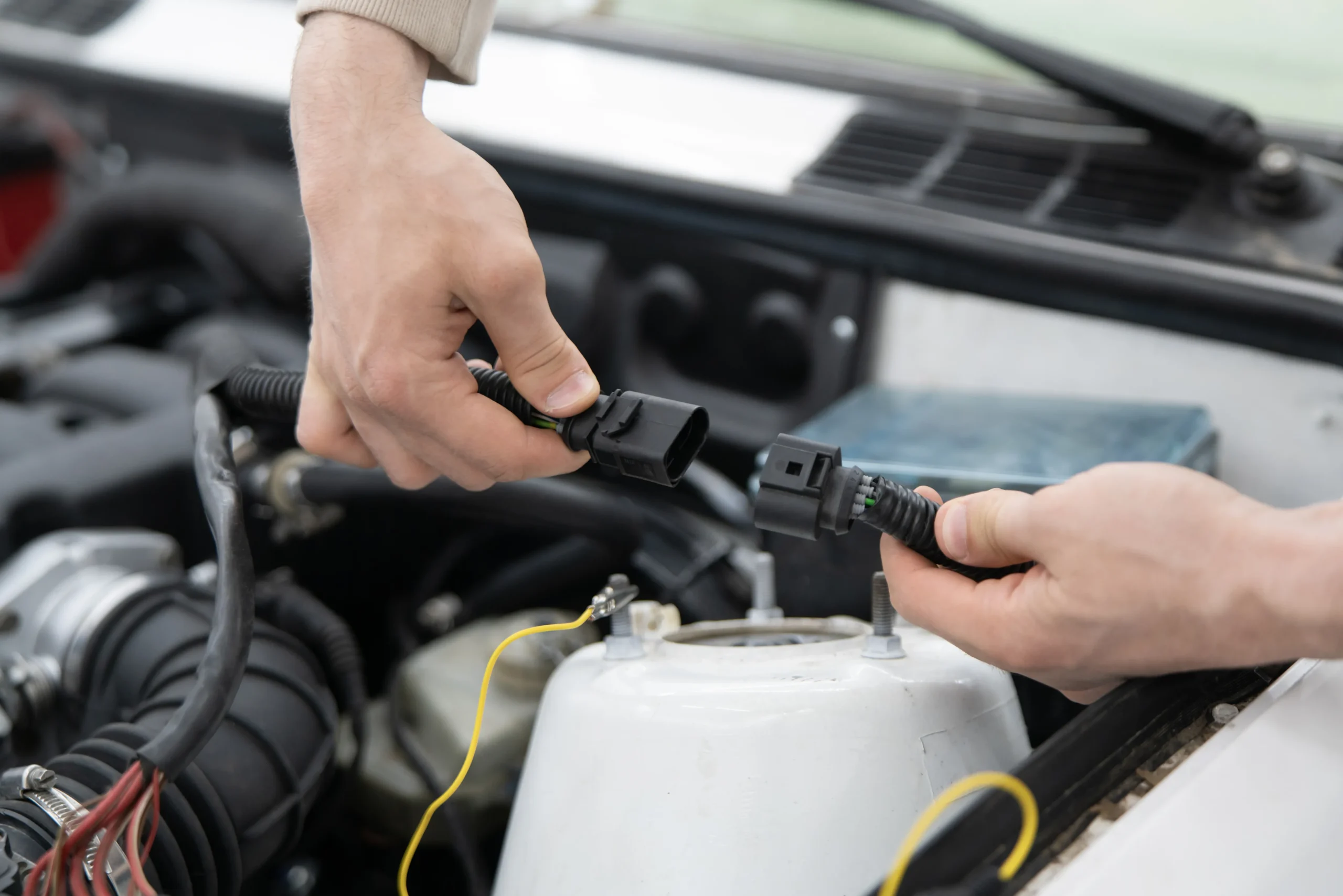
High-voltage automotive connector is an electrical interface used to transmit high-power electrical energy. Its operating voltage is usually 400V to 1000V (DC or AC). Its connected subsystems include battery packs, inverters, on-board chargers (OBC), DC-DC converters, and charging interfaces. Compared with ordinary 12V low-voltage automotive connectors, high-voltage automotive connectors must meet more stringent arc resistance, thermal stability, vibration resistance and personal safety requirements.
In China and the international standard system (GB/T, IEC 62196, SAE J1772 ), the term “new energy vehicle connector” is often used interchangeably with “high voltage electric vehicle connector (HV EV connector). ” Both of them refer to the connector products that are suitable for electrified systems with operating voltage higher than 60V DC and pass the corresponding certification.
Why is the Selection of Automotive Connectors in 2026 More Important than ever?
The EV industry is striding forward to the 800V high voltage architecture. The system voltages of Hyundai Motor (E-GMP platform), Porsche (PPE platform) and General Motors (Ultium platform) all reach or exceed 400V, and the peak charging voltage is close to 900V. This voltage trend has had a profound impact:
- Higher Arc Energy: When the 800V load is disconnected, the arc energy is much higher than 400 V, making the HVIL circuit an indispensable safety guarantee.
- Larger Thermal Stress: At 350 kW charging power, the connector terminal temperature can reach 85-105 ℃; material selection and contact geometry directly determine the life of the automotive connector.
- More Stringent EMI Requirements: Shielded high-voltage wiring harness must effectively suppress radiation emission to protect sensitive BMS and vehicle electromechanical subsystems.
- More Complex Certification Requirements: OEMs now require suppliers to complete the third phase of LV214, ISO 6469-3, and proprietary test protocols before the EV automotive connector can be included in the mass production supply.
How HVIL Protects Passengers?
High Voltage Interlock Loop (HVIL) is a low voltage signal monitoring circuit, which is designed to run through all high voltage connectors in the vehicle. The circuit monitors the connection state of the connector by continuously sending a detection signal. When any high-voltage connector is disconnected or not completely locked, the HVIL circuit will interrupt signal transmission due to the open circuit. After the battery management system (BMS) detects the signal interruption, it will trigger the main contactor to disconnect within a few milliseconds, thereby cutting off the high-voltage output.
The mechanism is designed to reduce the risk of high-voltage shocks to maintenance personnel or accident site personnel when they come into contact with vehicles. When evaluating automotive connectors in platform development in 2026, it is recommended to confirm that HVIL pins have been integrated into the automotive connector housing structure rather than post-addition to reduce potential failure points introduced by add-ons.
Key Specifications for Selecting High Voltage Automotive Connectors
1. Voltage & Current Rating
The rated voltage of the high voltage automotive connector should be at least 20 % higher than the maximum operating voltage of the system. For the 800 V platform, products with rated voltage ≥ 1, 000 V DC should be selected. The rated current must cover the peak charging scenario (not only driving conditions) – the current of the 350 kW charger at 800 V is about 437 A, and the 500 A rated product can be used to leave a sufficient margin.
2. IP Rating
The automotive connectors in the lower part of the body and the wheel arch area must reach IP67 at least (1 meter water immersion for 30 minutes). The automotive connector near the high-pressure water flushing area should meet IP69K (high-pressure high-temperature water gun flushing). The following table summarizes the typical protection level requirements of each installation area:
| Meaning of Different IP Ratings | |||
|---|---|---|---|
| Placement Zone | Min. IP Rating | Typical Use Case | Notes |
| Battery pack interior | IP67 | Cell-to-BMS, pack busbar | Also requires thermal runaway resistance |
| Underbody/chassis | IP67–IP69K | HV cable routing, motor inverter | Road splash & pressure wash exposure |
| Charging inlet (AC) | IP44 (mated) | J1772, CCS1, Type 2 | Must meet IEC 62196 for public use |
| Charging inlet (DC) | IP55 (mated) | CCS2, CHAdeMO, NACS | Higher thermal management needed |
| Interior (OBC, DCDC) | IP54 | On-board charger connections | Lower exposure risk; focus on vibration |
3. Operating Temperature Range
The electric vehicle connector EV connector must adapt to a full temperature range from − 40℃ (cold start in cold climates) to + 125℃ (around the inverter or motor). PPA (polyphthalamide) or PBT-GF30 are recommended for the shell material, both of which are known for their strong dimensional stability and good flame retardancy (UL 94 V-0).
4. Mating Cycles & Mechanical Durability
The maintenance connector on the battery pack should have no contact resistance attenuation after ≥ 50 insertions. The charging port connector, especially in the commercial fleet scenario, should meet the ≥ 10,000 insertion/extraction life specified in IEC 62196-1. At the same time, the reliability of the secondary locking device (TPA Terminal Position Assurance) must be confirmed to prevent a semi-inserted state in a high-vibration environment.
Competition Pattern of Automotive Connector Suppliers in 2026
The global EV high-voltage connector market has exceeded $4.2 billion in 2025, and the CAGR is expected to reach 22 % by 2030 (Source: MarketsandMarkets EV Connector Report). The main suppliers include:
- TE Connectivity: Sealed high-pressure automotive connector industry benchmark, DEUTSCH HDP series is widely used in EV powertrain.
- Amphenol: Has outstanding strength in the field of circular high-voltage automotive connectors and liquid-cooled charging cable assemblies.
- Aptiv (formerly Delphi): Provides a vertically integrated HV wiring harness solution for OEM platforms.
- Yazaki: Dominates the Japanese OEM supply chain with a strong IP69K certified product line.
- Rosenberger: Focuses on the segment market of 800V platform data + power composite connectors.
- JONHON/ACES: An emerging supplier in China, is rapidly expanding its share in the domestic NEV market with the electric vehicle charging connector that meets the GB/T standard.
TIANDIAN Notes: Specializes in processing and selling wire harnesses from internationally renowned brands such as TE, Deutsch, Amphenol, Delphi, and Bosch.
How to Choose the Right Automotive Connector?
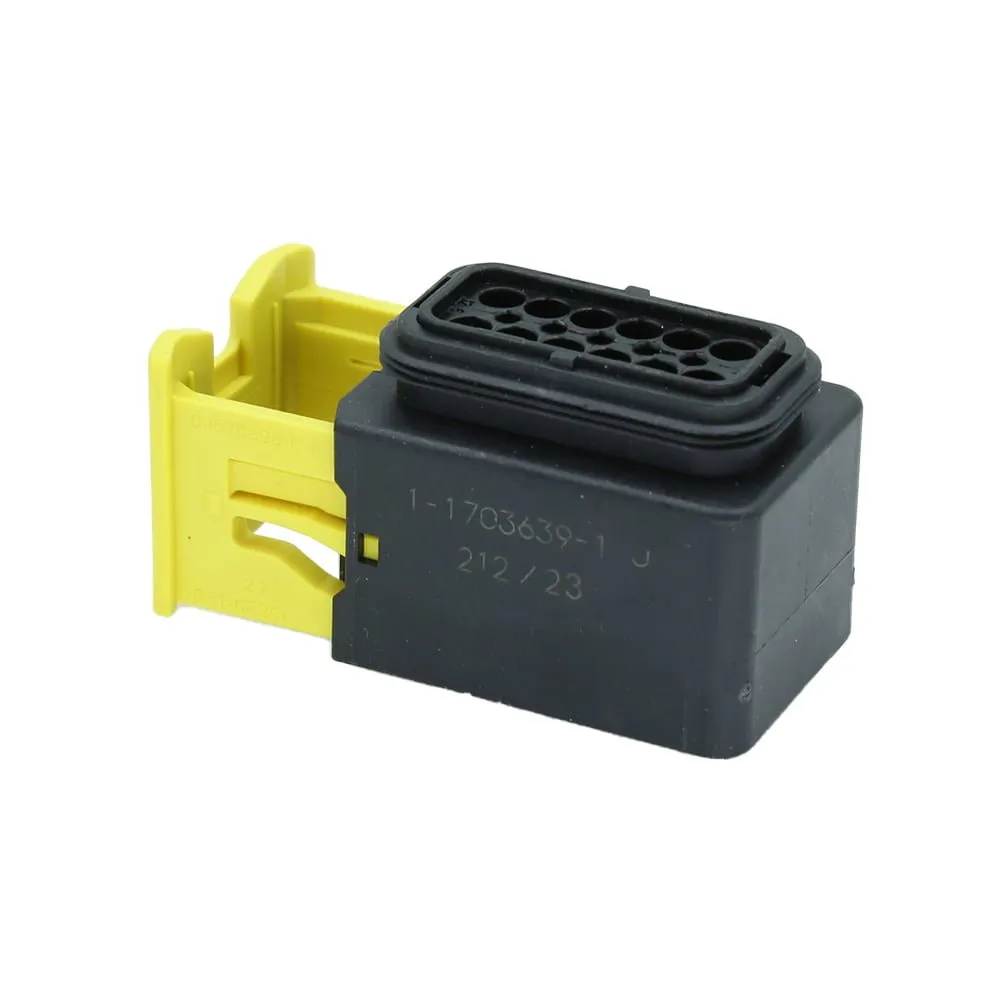
The selection of automotive connectors should follow the system’s engineering methods to ensure compatibility and reliability with the vehicle’s electrical system. The following are the selection steps based on technical parameters and application environment:
Confirm the System Voltage and Current
Firstly, the voltage level (such as 400V or 800V) is determined according to the high voltage system architecture, and the peak current required by the circuit is defined as the basis for the selection of the electrical performance of the automotive connector.
Analysis of Installation Environment Requirements
According to the actual layout position of each section of the harness, the required protection level (IP), working temperature range and anti-vibration level are defined respectively to ensure that the automotive connector can adapt to the corresponding working environment.
Follow the Relevant Regulations and Standards
According to the target market and application field, the automotive connector products that meet the standards of LV214 (European vehicle factory), GB/T 18487 (China new energy vehicle), SAE J1772/J3400 (North America) or IEC 62196 (international charging interface) are selected.
Check Supplier’s Technical Data
The key test reports such as contact resistance, temperature rise characteristics and dielectric withstand voltage of the automotive connector are obtained and verified to ensure that its technical indicators meet the design requirements. The technical requirements of the charging interface in the SAE J1772 standard can be referred to.
Sample Verification and Testing
Before determining the supplier, internal tests such as thermal cycling, salt spray (referring to ISO 9227) and mechanical impact of the sample were completed to verify the durability and reliability of the automotive connector in practical applications.
Considering the Later Maintenance Requirements
An automotive connector with a secondary locking structure and a color-coded housing is preferred. Orange housings are often used in high-pressure systems (ISO 6469-3 compliant) for easy identification and maintenance operations.
For further information on automotive connectors, please refer to our guide: Automotive Connector Symbol Analysis and Application Guide
Common Mistakes in Selecting Automotive Connectors for EVs
Low Voltage Level: Using 600V rated connector on 800V bus will cause arc risk and bring quality assurance exposure.
Ignoring the Terminal Material: Tin-plated automotive contact is suitable for low-frequency insertion and extraction scenarios; silver-plated or gold-plated automotive contacts should be selected for high-frequency insertion or high-humidity environments.
Ignoring HVIL Integration: Attaching HVIL as an independent wire loop instead of using a dedicated integrated automotive connector will increase the fault point by about 30 %.
Ignoring EMC Shielding Continuity: Discontinuity of shielding termination at each automotive connector is one of the main reasons for excessive radiation emission in vehicle type certification.
Select the Automotive Connector before Determining the Direction of the Wiring Harness: The physical wiring path should be planned first; the bending radius limit often determines the direction and shape structure of the connector.
How to Fix or Replace the Wiring Automotive Connectors on Your Vehicle?
Building a Future-Proof Automotive Connector Strategy
The automotive connector market continues to evolve under the impetus of the rapid development of the electric vehicle industry. As of 2026, the popularity of 800V high-voltage architecture, the wide application of liquid-cooled charging cables, and the rise of bidirectional V2 G power transmission technology have significantly increased the technical requirements for connectors. Engineers who invest sufficient resources in specification definition, supplier certification, and full life cycle testing can effectively reduce on-site failure rates, reduce warranty costs, and shorten OEM certification cycles.
When developing a new energy vehicle platform or upgrading a high-voltage wiring harness system, the electrical requirements should be clarified first, and then the selection scheme of the physical connector should be determined accordingly. The automotive connector is a key safety component, and its performance is directly related to the safety protection of vehicles and occupants.
FAQ
Do not use brute force or a screwdriver. The correct approach is: 1. Find the locking mechanism of the automotive connector (such as CPA pad), first slide it to unlock; 2. Using a professional needle retractor (Depinning Tool) to insert the terminal gap to press down the barb; 3. Lightly pull out the cable with the terminal.
Absolutely not! The current transmitted by the high-voltage cable is huge, and the welding point is prone to fatigue fracture in the long-term vehicle vibration, and the resistance of the solder will cause local overheating or even fire. The correct approach is to replace high-quality connector terminals with a professional hydraulic crimping tool.
The most fatal mistake is to underestimate the temperature rise under sustained high load. Many people only focus on the peak current, but ignore the continuous heating of the vehicle in extreme environments (such as fast charging or continuous climbing). Another common mistake is to mix different brands of terminals and sheaths, which will lead to insufficient air tightness, which will lead to water vapor intrusion and high-pressure short circuit.
The automotive connector is usually burned because of excessive contact resistance. This may be due to terminal oxidation, poor crimping (without the use of appropriate crimping tools), poor plug-in, or the purchase of cheap non-original (Aftermarket) inferior connectors. When a large current passes, excessive resistance will be converted into heat, eventually leading to the melting of the plastic shell.
If you do not have professional high-voltage electrical safety training and are equipped with insulation gloves (such as Class 0 insulation gloves), do not operate on your own. Before starting, the high voltage maintenance switch (MSD) must be removed according to the vehicle maintenance manual and wait for the capacitor to completely discharge. Safety is always the first principle when dealing with high-voltage connectors.