
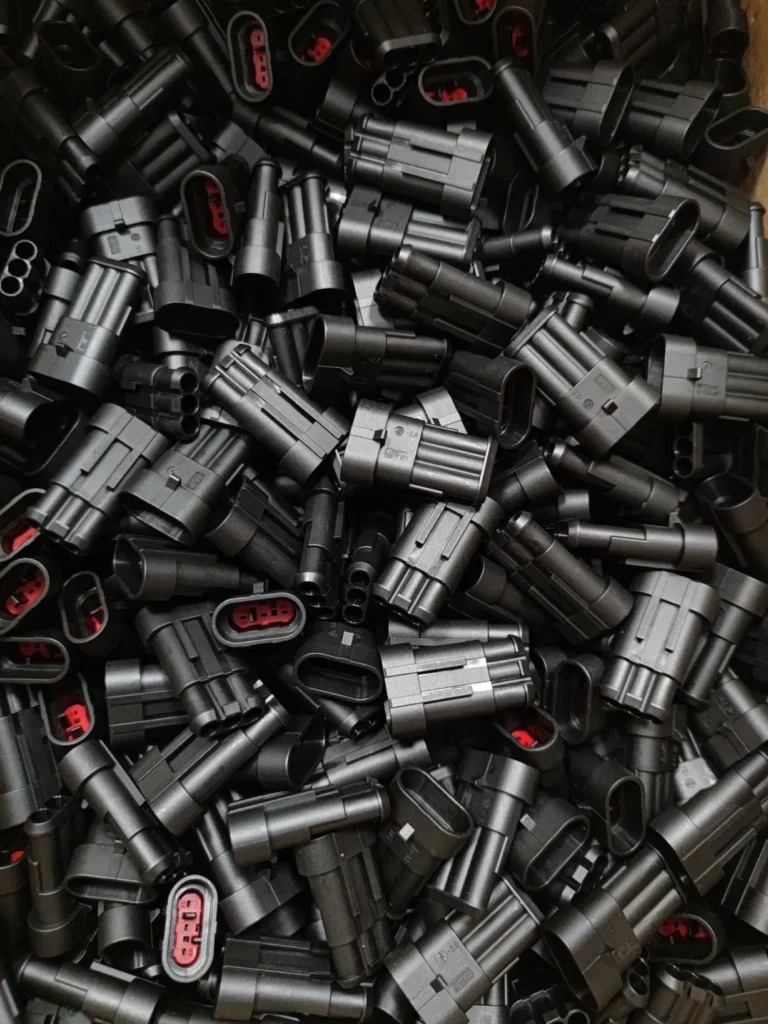
What are automotive connector housings
Automotive connector housings are plastic or metal enclosures used to protect and secure automotive wire connectors. They provide mechanical strength to the connectors, prevent loose connections, and protect the connectors from dust, moisture, and other environmental hazards. Connector housings are typically made of durable materials such as nylon or aluminum to withstand the rigors of the automotive environment.
How automotive connectors work
Automotive connectors make electrical connections by inserting male terminals into female terminals. When the connector housing is closed, it locks the terminals in place, ensuring a secure and reliable connection. Most automotive connectors also contain seals to prevent the ingress of moisture and contaminants. The locking mechanism on the connector housing prevents accidental disconnection while still allowing manual removal when needed.
Pros and cons
Advantages:
- Protects connectors from physical damage and environmental hazards
- Prevents connections from loosening or accidentally disconnecting
- Easy to assemble and repair without soldering
- Standardized design enables interchangeability
Disadvantages:
- Increased cost and complexity compared to hardwiring
- Connectors may take up valuable space
- Poor-quality connectors may result in unreliable connections
Types of automotive connector housings
Common automotive connector housing types include:
- Rectangular connectors – used for general applications, available in a variety of sizes and configurations
- Circular connectors – often used in applications requiring environmental sealing
- Board-to-wire connectors – used to connect wires to a printed circuit board
- Wire-to-wire connectors – used to connect one set of wires to another set of wires
- Sealed connectors – include waterproof seals, used in applications exposed to harsh environments
Considerations for choosing the right automotive connector housing
When selecting an automotive connector housing for an application, there are several factors to consider:
- Required current and voltage ratings
- Environmental conditions, such as temperature range, vibration, and chemical exposure
- Mounting space constraints
- Required wire gauge and quantity
- Ease of assembly and repair
- Cost budget
Installation and maintenance
Installing an automotive connector housing generally requires the following steps:
- Strip the wires and insert into the connector terminals
- Crimp or solder the terminals onto the wires
- Insert the terminals into the connector housing
- Snap the connector housing together until it locks into place
To ensure reliable long-term performance, automotive connectors need to be regularly inspected for signs of wear or damage. Any damaged connectors should be replaced to prevent electrical failures. Connectors should also be kept clean and dry, with an electronics cleaner used to clean the contacts when necessary.
Faults and Solutions
- Loose or disconnected connectors – Check locking mechanism for wear and replace damaged connectors
- Corroded connectors – Clean contacts and replace connectors if necessary. Ensure proper seal to prevent moisture ingress
- Damaged wires – Repair or replace damaged wires, ensuring proper strain relief
- Poor terminal crimping – Use proper crimping tool, ensure terminal is fully inserted into connector
By selecting quality automotive connector housings and following proper installation and maintenance procedures, you can ensure the reliability and long life of your vehicle’s electrical systems. Regular inspection and replacement of connectors when necessary can help prevent costly electrical failures and vehicle downtime.