
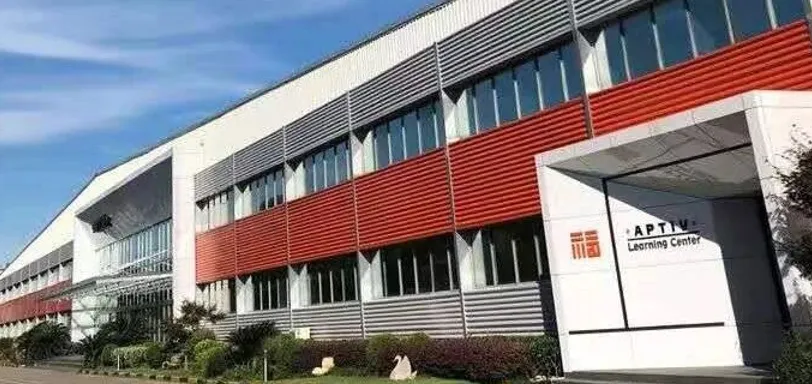
After establishing research and development centers in Shanghai and Suzhou, Aptiv continues to target the Yangtze River Delta region and has set up its third R&D center in China in Changshu.
On August 27th, Aptiv announced that its R&D center has officially settled in Changshu High-tech Zone. The new R&D center will be dedicated to developing advanced active safety technologies, intelligent connected vehicle solutions, safety systems, as well as software and hardware related to infotainment and user experience, further deepening its strategic layout in the field of intelligent connected vehicles in China.
01 Constant Actions! Aptiv Continues to Increase Its Investment in the Chinese Market
Since the beginning of this year, Aptiv has been continuously making strategic moves in China, successively launching multiple projects of different kinds.
In March, the new factory project of Aptiv’s high-voltage connector system for new energy vehicles was officially launched, with a total investment of up to 2 billion yuan.
In July, the Aptiv Wind River software project also landed in Jiading, Shanghai, complementing the existing technology center and production base. (Note: Wind River software enables the secure development, deployment, operation and service of critical intelligent systems, and can integrate the Wind River Studio cloud-native software platform into Aptiv’s industry-leading Smart Vehicle Architecture SVA™.)
A closer look at Aptiv’s continuous layout in the Chinese automotive market reveals that Aptiv is determined to build an automotive ecosystem in China.
In terms of automotive intelligence, Aptiv has been leading by example to illustrate what “software-defined vehicles” mean. At this year’s Beijing Auto Show, Aptiv launched its latest generation of localized software and hardware solutions and created an “integrated cabin, driving and parking” solution. Additionally, its advanced driver assistance system (ADAS) project in collaboration with Horizon Robotics has entered the mass production stage.
02 How did Aptiv achieve a growth from 5% to 50%?
Last year, in the global automotive connector market, Aptiv held a 12% market share (Note: Data sourced from Bishop & Associates and Big-Bit Industry Research).
As a leading global connector manufacturer, Aptiv has great ambitions for the huge Chinese market. To this end, Dr. Yang Xiaoming, President of Aptiv China and the Asia-Pacific region, has set a goal of achieving a 50% business growth in China within the next five years.
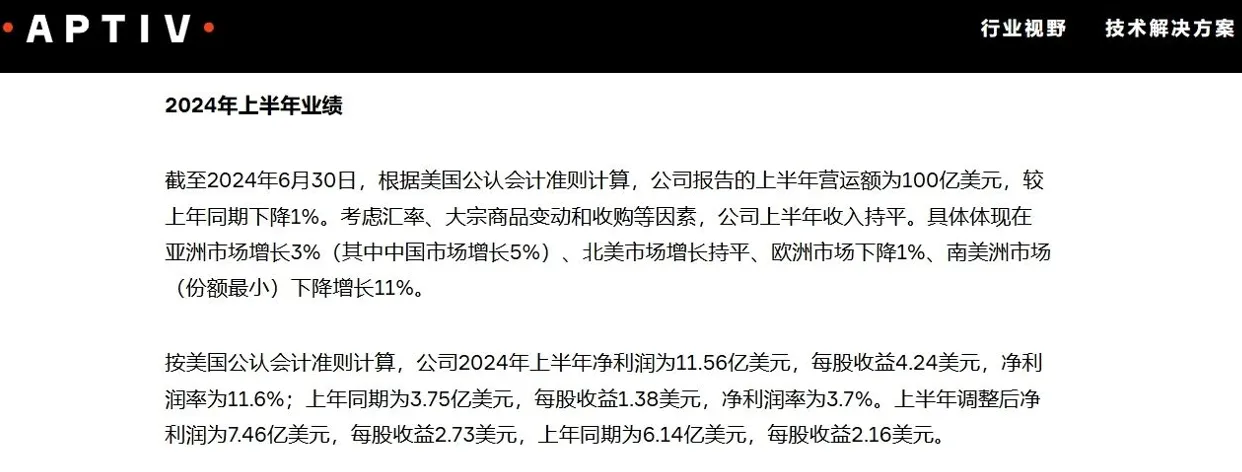
The financial report shows that Aptiv’s revenue in the first half of 2024 was 10 billion US dollars, a decrease of 1% year-on-year. Despite a 1% decline in the European market and an 11% increase in the South American market, Aptiv’s revenue in the Chinese market grew by 5%.
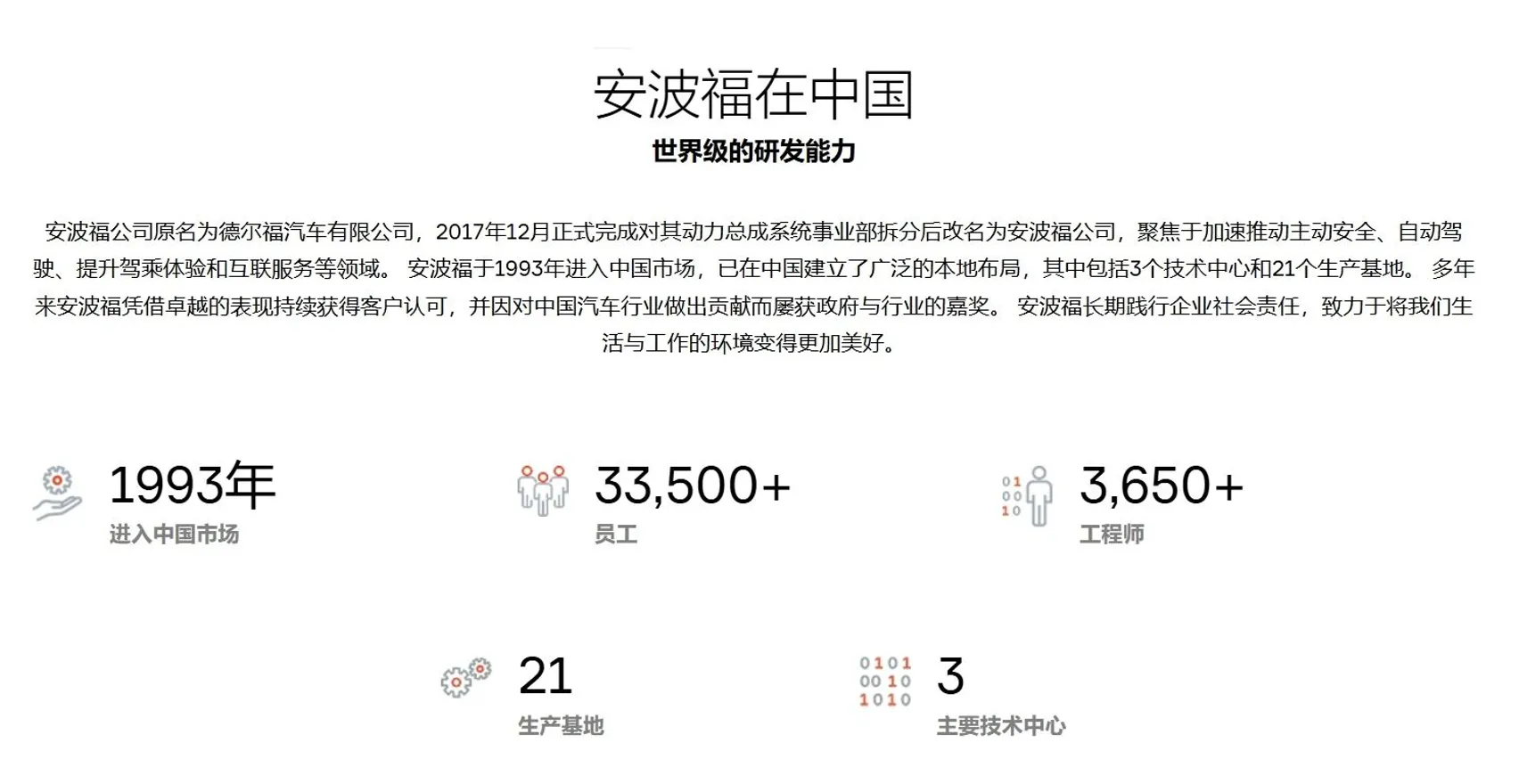
Looking back on the over 30 years that Aptiv has been in China, the company has fully implemented its localization strategy in the country.
▷Establishment of production bases: With 22 production bases in Shanghai, Wuhan, Wuhu and other places, it focuses on the production and supply of automotive wiring harnesses and connectors.
▷Establishment of technology centers: Engineering centers have been set up in the Yangtze River Delta region including Anting, Nantong, Yancheng and Suzhou, and plans are in place to develop an artificial intelligence center.
▷Emphasis on R&D investment: The proportion of R&D investment in the Chinese market by Aptiv has remained at 10% to 12% of its turnover for many years.
▷Strengthening local cooperation: It places great emphasis on collaboration with domestic independent brands, with the business proportion of local suppliers reaching 80%, and continuously promotes the localization strategy of “in China, for China”. It is not difficult to see that in order to achieve the goal of “a 50% business growth within five years”, Aptiv will spare no effort to make a breakthrough in the Chinese auto market in the future. This is both a crisis and an opportunity for domestic connector suppliers. How to seek possible cooperation and achieve technological upgrading is a subject that domestic connector manufacturers need to pay attention to.