

Automobile connectors are crucial components in automotive electrical systems, ensuring the normal operation of various electrical equipment and systems. Depending on the working voltage, automotive connectors can be divided into traditional automotive connectors and high-voltage automotive connectors.
This article will discuss in detail the classification, application and performance requirements of these two connectors.
Traditional automotive connectors
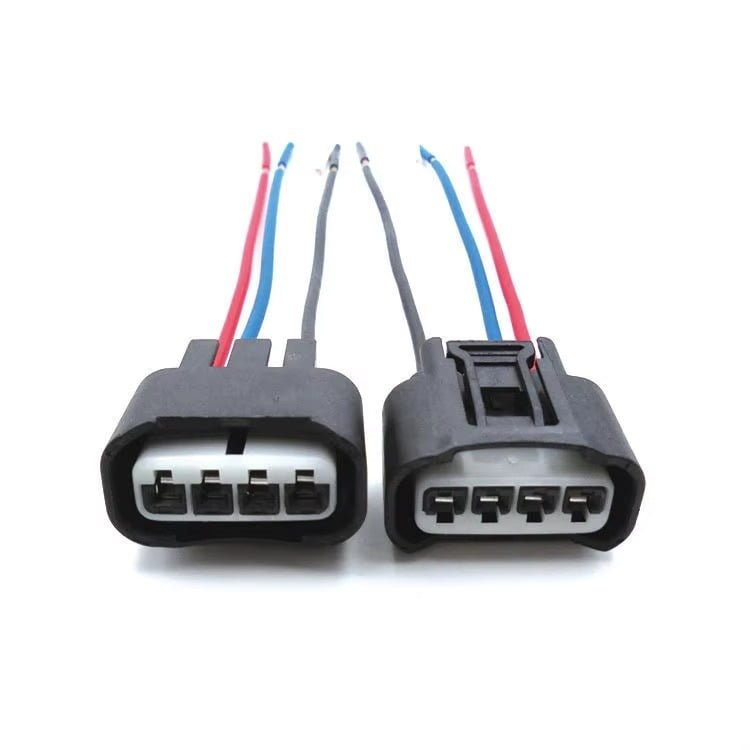
According to the working voltage, automotive connectors can be divided into traditional automotive connectors and high-voltage automotive connectors. The working voltage of traditional automotive connectors is below 60 volts, and they are widely used in the wiring harnesses and on-board electrical equipment of traditional fuel vehicles and new energy vehicles.
High-voltage automotive connectors
The working voltage of high-voltage automotive connectors is generally 600~1000 volts or higher, including connectors for high-voltage and high-current and high-voltage and low-current purposes, which are mainly used in high-voltage wiring harnesses and charging infrastructure of new energy vehicles.
High-voltage and low-current connectors are suitable for DC-DC converters, air-conditioning systems, etc. of new energy vehicles, while high-voltage and high-current connectors are used for motor controllers, charging equipment, power battery connection equipment, etc. of new energy vehicles.
Protection measures and performance requirements for high-voltage automotive connectors
In addition to being suitable for high-voltage environments, high-voltage automotive connectors also require high-voltage shielding, finger protection, high-voltage locking and other protective measures during design.
Since the materials used must have high temperature resistance, the requirements for sealing, electromagnetic shielding, waterproofing, protection and other properties are also much higher than those of traditional automotive connectors. Therefore, the quality and manufacturing precision requirements of high-voltage automotive connectors are usually high, and the product cost is also high. They belong to the middle and high end of automotive connector products with high added value.
Conclusion
In summary, automotive connectors play a key role in traditional fuel vehicles and new energy vehicles. In particular, high-voltage automotive connectors, due to their wide application in new energy vehicles and higher performance requirements, represent high-end products in the field of automotive connectors.
With the development of automotive technology, automotive connectors will continue to improve to provide guarantees for vehicle safety and performance.