
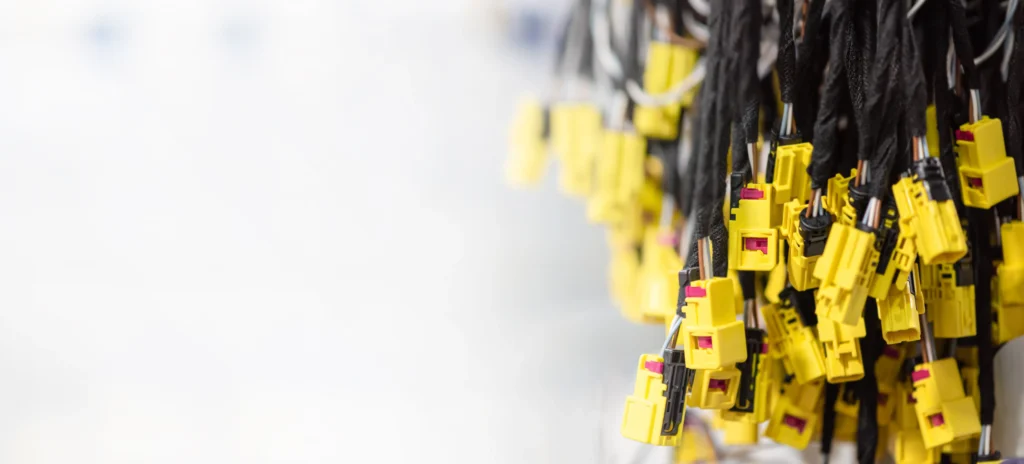
Each reliable electrical connection depends not only on the connector body, but also on the accessories used to protect the connector, including shields, caps, covers and seals. These accessories play a key role in electrical and electronic systems: preventing pollutants from entering, blocking electromagnetic interference, and extending the service life of the system in extremely harsh application environments.
Whether it is in the selection of components for automotive seals and parts, industrial machinery or aerospace components, an in-depth understanding of the functions of these accessories will help to make accurate engineering and procurement decisions.
What are Connector Accessories?
Connector accessories are auxiliary components designed for the use of electrical connectors. They do not transmit signals themselves, but provide crucial mechanical protection, environmental protection and electromagnetic protection for the connector interface. In professional and industrial application scenarios, connectors that are not fully equipped with accessories are usually considered as unfinished assembly.
Main categories of connector accessories:
- Connector shields: provide EMI/RFI shielding around the connector body.
- Connector caps: temporary protective caps for unmated connectors during storage or transportation.
- Connector covers: permanent or semi-permanent case, protected with mated connector pairs.
- Connector seals: gaskets, grommets and O-rings that prevent ingress of liquids, dust and gases (ingress).
Each category has different failure modes and is subject to different industry standards and specifications.
Types of Connector Accessories
Connector Shields – Block EMI and RFI
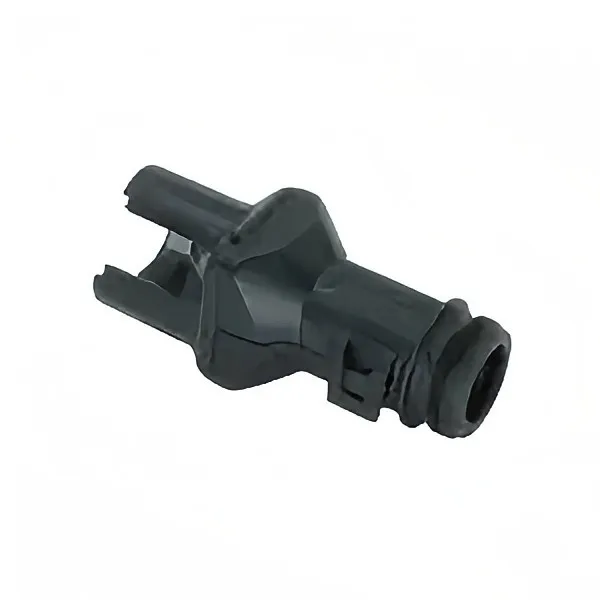
The connector shield is a metal or metallized shell that surrounds the connector body and is used to suppress or isolate electromagnetic interference (EMI). The material is usually zinc die-cast alloy, aluminum or nickel-plated plastic, and is designed to fit mechanically with shielded cable assemblies.
How connector shields work: the shield forms a continuous conductive path from the cable braid or foil to the chassis or ground plane to ensure that the high-frequency noise will not leak in or out from the connector interface. A defective shield, such as gaps, poor backshell contact, or lack of strain relief, significantly reduces signal integrity at frequencies above 100 MHz.
Key parameters:
- Transfer impedance: the lower the value, the better. High performance shields are usually less than 10 mΩ/m.
- Shielding effectiveness: measured in dB over a specified frequency range.
- Contact method: 360°circumferential clamp and pigtail termination.
- Compatibility with cable outer jacket materials
When to use the connector shield: All applications involving high-speed data transmission, radio frequency (RF) transmission, sensitive analog signals, or working environments close to switching power supplies or motors should use fully shielded connector accessories. MIL-DTL-38999 and IEC 61918 specify shielding requirements for defense military and industrial fieldbus applications, respectively.
Connector Caps – Short-term protection during storage and handling

Connector caps (dust caps or protective caps) are temporary plugs applied to mating faces of unfitted connectors. Its role is to prevent physical damage to contacts, prevent pollutants from entering during storage or transportation, and prevent accidental electrostatic discharge (ESD) events.
Materials: The most common materials for protective end cover are polyethylene, polypropylene or nylon. High-standard models use polyurethane to improve chemical resistance. Metal end caps with threaded locking are common in aerospace and military applications.
Classified by application scenarios:
- Storage caps: low cost, usually disposable ; for production line environment
- Field service caps: durable and reusable, sometimes secured to the connector housing by tethering to prevent loss
- Hermetic caps: some models have built-in hygroscopic desiccants, which are suitable for long-term storage in humid environments.
Practical operation principle: before the uncooperative connector components are sent to the factory or put into storage, it is necessary to install the supporting protective end cover. Even if exposed to the air of the workshop for a short time, conductive particles may be deposited on high-density contacts, causing short circuit or contact failure.
Connector Covers – Long-term protection with connector pairs
The protective end cover protects the unfit connector, while the connector cover protects the matched connector pair, that is, after the plug and the receptacle are matched, the entire matching area is closed. This is particularly important in outdoor, mobile or industrial environments where connectors need to remain connected for a long time under sustained physical and environmental stress.
| Comparison table of connector cover types | |||
|---|---|---|---|
| Cover Type | Protection Focus | Typical Material | Common Application |
| Boot seals/backshell boots | Strain relief + ingress protection | Silicone, PVC, polyurethane | Automotive,marine |
| Overmold covers | Full encapsulation | Epoxy,polyurethane | Industrial,outdoor |
| Panel-mountcovers | Dust and splash protection | Polycarbonate,ABS | Control panels,enclosures |
| Hinged flap covers | Quick-access protection | Neoprene,silicone | Consumer devices, test equipment |
Connector Seals – Prevent liquid, dust and gas intrusion
Connector seals are the category with the highest technical accuracy requirements in connector accessories. They are elastomeric components, usually O-rings, face seals, wire seals or interfacial seals, which are compressed to create a sealing barrier to isolate the liquid, dust and gas channels between the connector and its mating surface or the cable inlet.
Types of connector seals:
- Wire seals (individual): small silicone grommets, holding a single wire through the backshell of the connector. It is widely used in automotive connectors from manufacturers such as TE Connectivity and Aptiv (formerly Delphi).
- Mat seals (bulk): one-piece elastomeric mat, pre-molded with threading holes corresponding to all wires, achieving uniform overall sealing in a large-needle connector.
- Interfacial seals: a planar elastomer sealing ring installed in the groove of the connector mating surface, sealing the mating interface between the plug and the socket.
- Panel seals/flange seals: pressed between the flange of the connector and the mounting panel, and sealed at the perforation of the panel.
- Potting and encapsulants: for the highest protection levels (IP67, IP68, IP69K), the connector can be filled with two-part epoxy or polyurethane to achieve a permanent hermetic seal.

Material choices for connector seals: silicone rubber is still the most widely used sealing material due to its wide operating temperature range (usually – 60 ℃ to + 200 ℃), UV aging resistance, and resistance to water and most automotive liquids. EPDM is preferred when ozone and weathering resistance requirements are prominent. Fluorosilicone (FVMQ) is specified for use when fuel and oil resistance is required, and is particularly common in automotive seals and parts applications near the engine compartment.
How to Select the Appropriate Connector Accessories?
Choosing the right connector accessory requires a systematic evaluation of the following 5 key factors.
Environment severity
Identify the worst operating conditions: maximum temperature, liquid or chemical exposure, ultraviolet radiation, vibration level and expected service life. IP67 seal usually meets the needs of most automotive outdoor applications; food processing production lines may require IP69K protection with stainless steel hardware.
Connector system compatibility
Connector accessories are not common parts. The seals designed for Deutsch DT series connectors cannot be installed on AMP Superseal 1.5. Always purchase accessories from the connector manufacturer’s approved parts list or cross-reference program.
EMI requirements
If the application involves a sensitive signal or the working environment is close to the noise source, a shielded connector accessory with a clear transfer impedance must be specified. For military and avionics systems, it is necessary to find accessories that meet the impact vibration requirements of MIL-DTL-38999 Series III or DO-160 (Aviation Equipment Environmental Conditions and Test Procedure Standards).
Material compatibility
Match seals and protective housing materials according to the chemical environment. Silicone rubber has a good effect on water and general automobile liquid, but it may swell in concentrated hydrocarbons. Fluorosilicone or Viton provides better tolerance in fuel contact applications.
Temperature range
The upper limit of rated temperature of standard PVC and nylon end cap/protective shell is about + 85 ℃. Silicone rubber and fluoropolymer accessories can be extended to + 200 ℃ and above. It is necessary to verify that the rated temperature range of the attachment matches the thermal profile of the installation position, including the transient temperature peak.
Connector Accessories for the Automotive Application: Automotive Seals and Parts
Automotive seals and parts are critical components designed to prevent fluid leaks, maintain pressure, and block external contaminants like dust and moisture from sensitive vehicle systems. They are typically made from durable materials like EPDM rubber, nitrile, silicone, or metal to withstand extreme temperatures and pressures.
Why automotive connectors require special seals
Automotive electrical failures caused by corrosion or pollution are one of the most common and costly warranty issues in the industry. The connector seal prevents galvanic corrosion at the contact interface by preventing water intrusion, which solves this problem from the root.
In the body and chassis harnesses (including doors, tailboxes, undercarriage), the IP67 seal connector system with individual wire seals and mating face seals has become an industry standard.
Core automotive standards for managing connector accessories:
- LV 214 (German OEM standard): specify the sealing performance and mechanical robustness of automotive high pressure (HV) and low pressure (LV) connectors.
- USCAR-2: the performance requirements of the electrical connector system formulated by Automotive Electronics Council.
- ISO 16750-4: environmental testing standards covering thermal shock, vibration and liquid exposure.
High-Voltage Connector Accessories for Electric Vehicles
The rapid development of battery electric vehicle (BEV) has promoted the rise of a class of connector accessories designed for 400V to 800V DC high voltage systems, mainly including:
- Orange-colored covers and caps: according to ISO 6469-3 and OEM color code standards, orange is used to identify HV circuits and provide safety warnings for maintenance personnel.
- Shielded backshells: equipped with 360°EMI termination to meet the requirements of CISPR 25 radiation emission limit and suppress the interference of high voltage systems on vehicle radio equipment.
- High-temperature silicone seals: rated to operate in high-temperature environments near battery thermal management systems.
- Interlock connectors and shorting caps: achieve safe-state management in maintenance operations to prevent high-voltage accidental electric shock.
In the field of electric vehicles, connector accessories are not only protective components, but also an integral part of the functional safety system.
Conclusion
Connector accessories-shield cover, protective end cover, protective shell and seal-are the key protective layers between normal operation and premature failure of electrical systems. Making the right choice means an in-depth understanding of the specific threat environment (EMI, moisture, pressure, chemicals, temperature), a combination of matching seals and protective casings that meet the IP level requirements, and the selection of test-certified accessory products.
From automotive seals and parts that withstand high engine compartment temperatures and road splashes, to aerospace backshells that protect avionics signals at high altitudes, the core principles remain the same: protect interfaces, maintain shielding continuity, and never underestimate the cost of an unprotected connection.
FAQ
The end cap is a temporary protective cap applied to the unfitted connector during storage or transportation. The purpose is to prevent contamination intrusion and physical damage, and to remove it before the connector is put into use. The seal is a permanently integrated elastomer element in the service state (whether it is matched or not) of the connector, forming a lasting compression seal barrier in the liquid and particulate matter intrusion channel. The functional stages of the two are different and cannot be replaced by each other.
IP67 is the industry minimum standard for the external connection of passenger car bottom and body. Connectors in the engine compartment near the risk of liquid should be specified IP67 or IP68 grade. Applications involving high-pressure flushing (commercial trucks, agricultural machinery) must reach IP69K.
Identifying the right seal for your vehicle depends on whether you are looking for a mechanical seal (like an oil or engine seal) or a weather seal (like those for doors, trunks, or windows). The most reliable way to ensure a perfect fit is to use your vehicle’s 17-character VINto look up parts in an Electronic Parts Catalog (EPC) or through a dealership parts portal.
When replacing seals in your car, you should consider the type of seal (e.g., rubber weatherstripping vs. mechanical oil seals), the condition of the mounting surface, and whether you have the specialized tools required for a precise fit.
Automotive seals are specialized components designed to prevent fluid leaks, block contaminants, and maintain pressure within various vehicle systems. They are generally categorized into static seals (between non-moving surfaces) and dynamic seals (between surfaces in relative motion).