
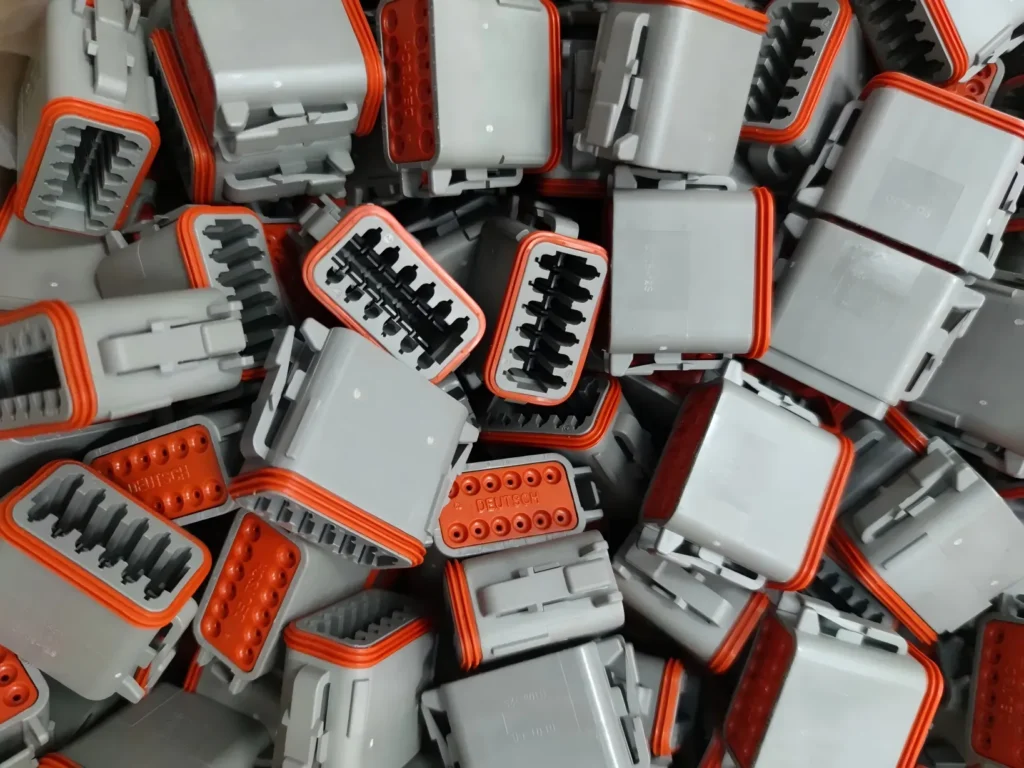
As the automotive industry enters the era of electrification, intelligence and autonomous driving, the complexity of the vehicle ‘s electronic system has grown exponentially. Traditional standardized automotive electrical connectors are often inadequate in the face of extreme thermal loads, high-frequency vibrations and stringent requirements for high-speed data transmission under the hood.
In order to ensure the reliability, security and optimal performance of key systems, customization has become an inevitable choice. Customized automotive wire connectors can accurately match the needs of specific applications and exceed the limitations of common standard parts.
We will explore the importance of custom automotive connectors, design and material considerations, and analyze the value of testing.
The Importance of Application-Specific Automotive Connectors
Ready-made automotive connectors may meet general standards, but may not meet the professional needs of your application.
For example, extreme environments – high vibration zones in off-road vehicles or intense hot zones near the engine compartment – require durable connectors. In this case, the use of standard connectors may lead to failure, increased maintenance costs or decreased system performance.
Customization solves these problems. It enables manufacturers to optimize the connection system according to different needs, so that the vehicle can operate reliably even under the worst conditions.
Custom connectors improve the performance and efficiency of vehicle electrical systems. This is particularly important for electric vehicles ( EVs ), self-driving cars and advanced driver assistance systems ( ADAS ). Because innovation relies on professional electrical connections.
Design Considerations When Customizing Connectors
Successful custom connectors require engineers to understand the application environment and functional requirements in depth.
Electrical performance and thermal management
Rated current / voltage : It must be ensured that the automotive connector can continuously and reliably handle the peak current and voltage required for the application while retaining sufficient safety margin.
Contact resistance : It is important to maintain extremely low contact resistance, especially in high current applications. Low resistance can reduce power loss and heat generation.
Temperature rise control : The design must ensure that the temperature rise of the automotive connector does not exceed the thermal degradation temperature of the material under the maximum current load, thereby avoiding performance degradation or permanent damage.
Mechanical durability and assembly
Vibration and shock : A robust locking mechanism and high holding force terminals are designed to ensure that automotive electrical connectors are not loosened or intermittently disconnected under high-frequency vibration and mechanical shock.
Sealing grade ( IP Rating ) : According to the installation position ( such as inside or outside the car ), select the appropriate IP grade ( such as IP67 or IP69K ), design an efficient sealing structure to prevent water and dust from entering.
Anti-dead design ( Poka-Yoke ) : Ensure that the automotive connector has a unique geometric shape and color coding to prevent technicians from incorrectly plugging or reverse plugging during the assembly process.
Material Selection for Enhanced Performance
| Automotive Connector Components | Key Functions | Material Selection |
| Contacts ( Terminals ) | Conductive, elastic, anti-fatigue | High-strength copper alloys, surface coatings |
| Shell (Insulator ) | Insulation, mechanical protection, chemical resistance | PBT, PA66, PPS and other high performance engineering plastics |
| Seals ( Sheath ) | Environmental sealing ( waterproof and dustproof ) | Elastomers such as silicone rubber or fluorine rubber |
When customizing connectors, it is important to choose the right materials because they affect durability, electrical conductivity, sealing performance and resistance to environmental challenges.
Copper alloys are very suitable for metal parts, such as pins or contacts, because of their excellent electrical conductivity and corrosion resistance. Gold or silver plating improves performance by reducing resistance and contact wear. Manufacturers may be able to select plating where appropriate to strike a balance between performance advantages and costs.
The housing and insulating materials also contribute to the connector performance. Thermoplastic polymers, such as polybutylene terephthalate ( PBT ), are valuable because of their resistance to heat, chemical substances and mechanical stress. PEEK ( polyetheretherketone ) may be useful due to its high thermal or chemical resistance.
Sealing materials, such as silicone or EPDM ( ethylene propylene diene monomer rubber ), can protect the connector from external pollutants ( including dust or water ).
In addition, flame retardant materials support safety, especially for electric vehicles. Strict fire safety regulations control the manufacture of lithium-ion batteries and connector manufacturers must comply with UL 94 flame retardant standards.
Testing and Validation of Custom Connectors
Environment simulation test
Thermal shock / high-low temperature cycle : simulating the rapid temperature change of vehicles in different climatic regions.
Salt spray corrosion test : evaluate the corrosion resistance of connectors in coastal or snowy areas for long-term use.
Hygrothermal aging test : verify the long-term reliability of sealing materials in a high temperature and high humidity environment.
Mechanical performance test
Vibration durability testing : Usually carried out in accordance with industry standards such as USCAR or ISO, to ensure electrical and mechanical integrity under prolonged vibration.
Terminal retention test : ensure that the terminal can be firmly locked in the shell when the harness is pulled.
Electrical performance test
Contact resistance change ( LCR ) : The resistance change of the connector after all environmental and mechanical stress tests is measured, which is a key indicator for judging whether the connector is aged.
Insulation resistance and withstand voltage test : verify the electrical safety performance of insulating materials under humid or high temperature conditions.
Examples of Application-Specific Solutions
The actual case shows the value of customizing automotive connectors to adapt to various applications.
Customized connectors in electric vehicles can safely and efficiently handle high-voltage direct current. These connectors use enhanced insulating materials and locking mechanisms to ensure safety and ease of maintenance during use.
Autonomous vehicles rely on numerous sensors and cameras, so dedicated connectors are required to provide high data transfer rates and environmental interference protection. Manufacturers have introduced innovative solutions such as shielded connectors to prevent signal interruptions.
Agricultural and construction vehicles benefit from strong connectors that can withstand constant dirt, moisture and vibration. A significant improvement is the addition of an internal pressure balance system to prevent the accumulation of moisture in the sealed connector.
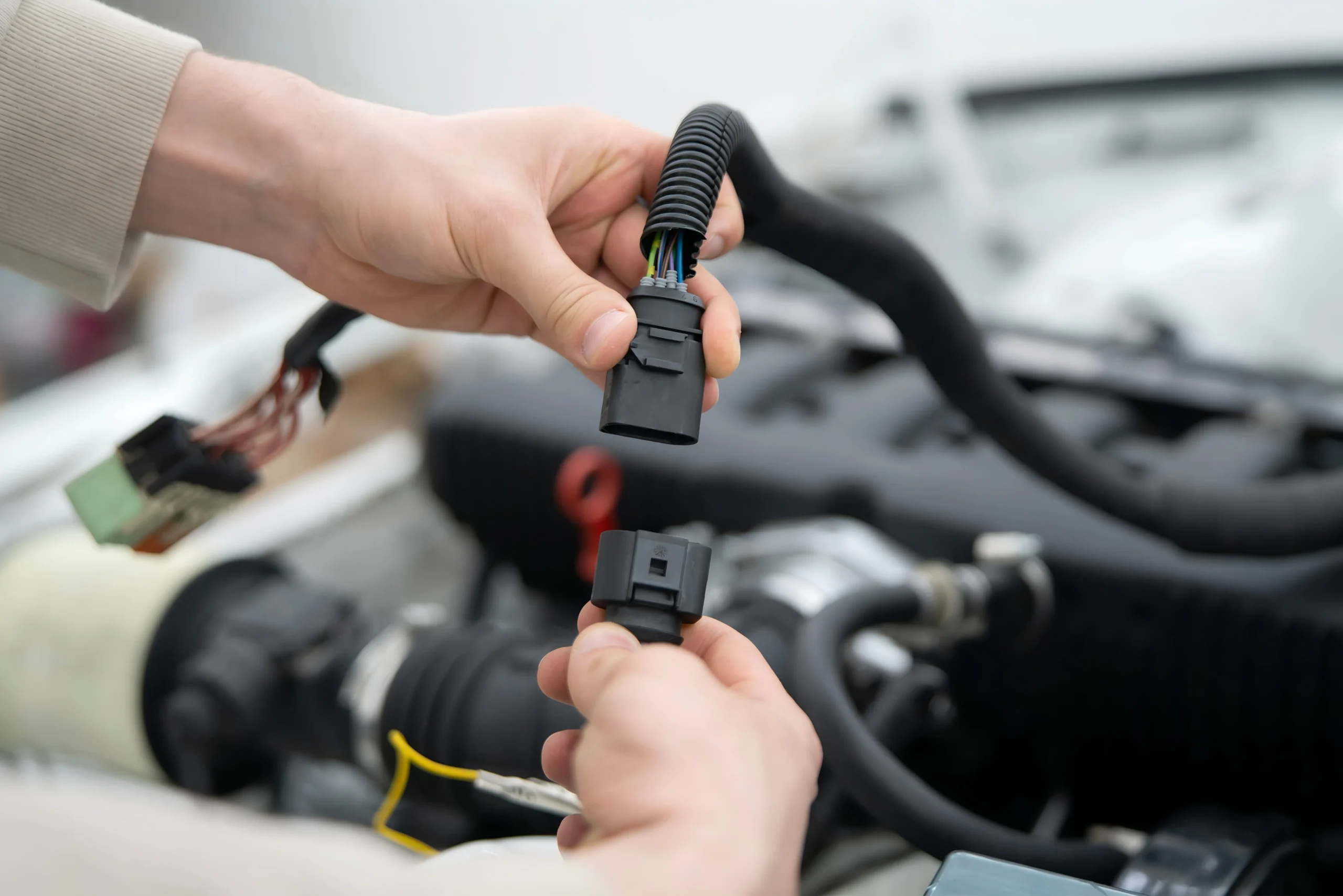
Partnering With Experts for Custom Solutions
The development of customized connectors requires close cooperation between manufacturers and connector suppliers. Experienced suppliers bring technical expertise, professional facilities and insight into emerging trends in the industry.
Cooperation with experts enables enterprises to accelerate the development cycle, meet industry standards and allocate internal resources when necessary.
Working with our Tiandian team to customize automotive connectors, you will get :
- Supply chain integration : Using our knowledge of materials science and manufacturing processes to optimize costs and production cycles.
- Comprehensive Certification and Compliance : Ensure that all customized automotive wire connectors meet the most stringent quality standards and regulatory requirements in the automotive industry.
Final Thoughts
In the era of accelerating change in the automotive industry, standardized automotive connectors are being replaced by application-specific custom solutions.
Through precise design considerations, optimized material selection, and rigorous test verification, custom automotive connectors can solve the challenges of extreme environments, provide key support for the performance, safety, and reliability of next-generation vehicles.