
In the third quarter of 2025, the world’s top three connector companies – Amphenol, TE Connectivity, and Aptiv – released their latest financial reports. Faced with multiple industry drivers such as the accelerated construction of AI computing infrastructure, the increased penetration of new energy vehicles, and the upgrading of communication technologies, the three companies showed significant differences in growth pace, business structure, and strategic layout.
Based on publicly available financial reports, this article presents the latest landscape and future direction of the connector industry from four dimensions: core data, business breakdown, industry insights, and key variables.
Data snapshot: A three-way divergence in growth rate, profit and cash flow
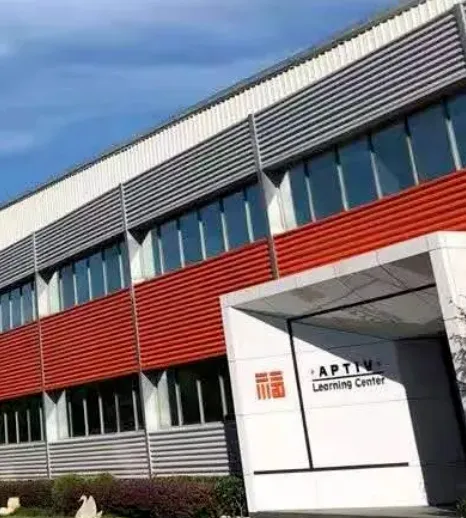
The financial reports show that the three companies have significant differences in revenue growth rate, profit performance and cash flow health:
Amphenol: High growth + high profit;
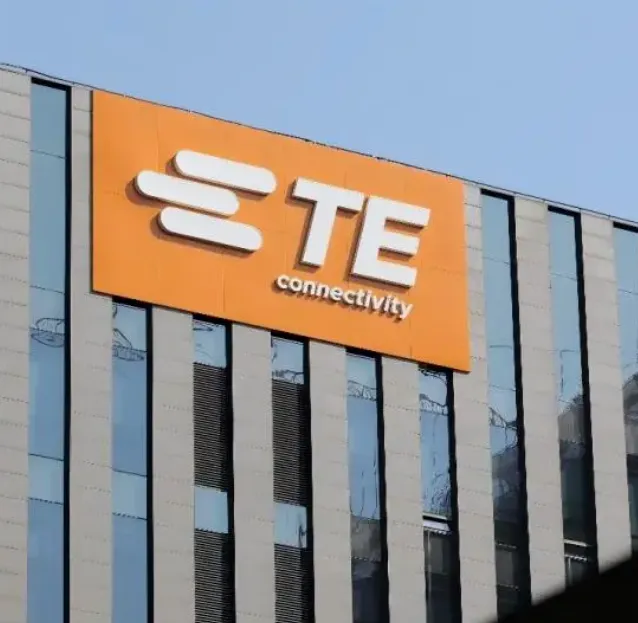
Tyco Electronics: Steady scale + strong cash flow;
Aptiv: Electric vehicle support growth, intelligent business under pressure.
The underlying reason for this differentiation is strongly related to the business segments of the enterprises.
Business Breakdown: The Growth Engines and Strategic Paths of the Big Three
1. Amphenol: AI and Communication Drive Strong Growth, Leading the Pack
01 IT Data Communication Business Remains Robust
Driven by the demand for AI servers and supercomputing centers, the IT data communication segment saw organic growth of 78.6%. The continuous increase in demand for high-speed interconnect and optical interconnect products pushed the revenue of the communication solutions department to $3.31 billion. The operating margin further improved to 32.7%.
The company emphasized that high-speed interconnect, power systems, and cable assemblies remain key drivers for future growth. As the density of AI training clusters increases, the demand for high-speed connectors will remain strong.
02 Synergy across multiple segments leads to structural improvement
The harsh environment solutions division benefited from the growth in aerospace and defense demand, with revenue increasing by 27% year-on-year; the interconnect and sensor systems division grew by 17.8% driven by automotive electronics and industrial applications.
03 Strong Cash Flow Supports Long-Term Strategy
The company’s operating cash flow increased by 86% year-on-year, supporting share repurchases, dividends, and acquisition plans, including a proposed $10.5 billion acquisition of CommScope’s CCS business to enhance optical interconnect capabilities.
2. Tyco Electronics: Dual-Driven Growth in Industry and Transportation, Steadily Navigating Through Cycles
01 Industrial solutions become the main growth driver
The industrial segment’s revenue for this quarter was 2.336 billion US dollars, representing a year-on-year increase of 34.41%. The digital data network business, driven by the demand for AI data centers, grew by 79.9%.
The company stated at the earnings call that high-density power connection and high-speed signal transmission products continued to gain traction among major cloud service customers. Meanwhile, the stable growth in demand for new energy and energy storage-related businesses contributed to an overall profit margin increase to 20.3%.
02 Transportation solutions grow steadily
The automotive business achieved moderate growth, driven by the increased penetration of high-voltage connectors and new energy vehicle models; the commercial transportation business grew by 7.4%; although the sensor business experienced minor short-term fluctuations, its long-term demand remains positive.
03 Abundant Cash Flow, Balancing Investment and ReturnThe company’s operating cash flow and free cash flow both reached record highs throughout the year. It continued to pursue acquisitions and shareholder returns and expects to maintain growth in the next fiscal year.
3. Aptiv: Electrification supports performance, while intelligent transformation is still in the accumulation stage.
01 The electrification business has become a major support
The revenue of the power distribution system department increased by 7% to 1.92 billion US dollars;
The high-voltage PDU and 800V high-voltage wiring harness products continued to grow in volume, bringing significant increments;
The proportion of electrification-related products in the power distribution system business has further increased.
02 Intelligent business under pressure but long-term direction remains unchanged
The revenue of the Advanced Safety and User Experience Department was 1.64 billion US dollars, a slight year-on-year decline;
The company pointed out that some high-end projects were in the customer verification stage, and the short-term delivery pace was relatively slow;
The construction of local R&D and software capabilities continued to advance, which is expected to enhance the competitiveness of future products.
03 Localization and Cost Control Maintain Profitability
Aptiv continues to advance localization of production and supply chain optimization in China, increasing capacity utilization to 82% and maintaining an adjusted operating margin of 12.2%.
III. Industry Insights: The Triple Driving Forces of AI, New Energy, and Communications Continuously Unleashed
01 AI Computing Infrastructure: The Demand for High-Speed Interconnection Enters a New Cycle
The continuous training of large AI models is driving the upgrade of server, switch, and accelerator architectures, leading to a structural increase in the demand for high-speed interconnection products:
Faster rate iteration: 224G PAM4 and 800G/1.6T optical modules have become mainstream, driving the demand for higher-density and lower-loss interconnection solutions;
Power supply architecture upgrade: The 48V power supply architecture is becoming widespread, increasing the demand for high-power connectors and power distribution modules;
Increased system integration complexity: AI servers have higher requirements for signal integrity (SI) and power integrity (PI), promoting an increase in the proportion of high-value-added interconnection solutions.
Global AI investment is still expanding, and leading manufacturers have entered a new cycle of GPU cluster construction. The demand for high-speed interconnection is expected to remain highly prosperous in the next 3 to 5 years.
02 New Energy Transition: Dual-track Progress in Electrification and Energy Storage
The rapid expansion of new energy vehicles and energy storage systems is continuously driving the growth in demand for high-voltage, high-temperature resistant, and highly reliable connectors:
The penetration rate of 800V platforms is increasing, further boosting the value of high-voltage connectors per vehicle;
Domain control and centralized electrical architectures increase connection density, generating more demand for lightweight and high-voltage fast-charging related products;
The large-scale deployment of energy storage systems is promoting the standardization and modularization of high-current and high-safety-grade connectors.
Under the impetus of carbon neutrality policies and the global energy structure adjustment, new energy applications will become one of the most stable growth sources for the connector industry in the future.
03 Communication Infrastructure: 5G-A, Optical Network Upgrades and Satellite Communications Open Up New Spaces
The demand brought about by the upgrade of communication technologies is not only concentrated on the operator side but also extends to enterprise-level communications and satellite communications:
The accelerated deployment of 5G-A, with higher frequencies and larger bandwidths, drives the upgrade of RF connectors;
The upgrade of optical network architectures (such as the evolution from 400G to 800G) boosts the demand for optical interconnections;
The accelerated construction of low-orbit satellite internet brings structural opportunities for high-reliability and vibration-resistant RF and antenna connection products.
As communication scenarios evolve from “ground networks” to “space-ground integration”, the product categories of connectors are also expanding accordingly.
IV. Key Variables: Race Track Selection and Technological Depth Determine the Outcome
Judging from the financial performance of Amphenol, Tyco Electronics and Aptiv, the choice of business segments and technological depth are becoming the key variables that determine the upper limit of growth.
On the revenue side, Amphenol has benefited from the explosive growth in demand for AI computing power and communication infrastructure, achieving leading expansion; Tyco Electronics has steadily advanced by relying on the two major sectors of industry (AI + new energy) and transportation; while Aptiv continues to focus on automotive electrification, its performance growth has become more moderate as the penetration rate growth slows down.
The differences in profitability are more obvious: Amphenol has been driving its profit margin to continuously increase by relying on high-margin product structures such as high-speed interconnects and optical interconnects; Tyco Electronics’ industrial segment has performed steadily, but its transportation business remains a drag; Ansaldo has been mainly focused on traditional wiring harnesses, with limited added value of its products, and thus faces pressure on profitability.
In the Chinese market, the strategic paths of the three enterprises are distinct. Amphenol focuses on high-speed interconnection and the AI server ecosystem, deepening cooperation with leading domestic technology companies; Tyco Electronics concentrates on new energy vehicles and energy storage, accelerating the localization of production and supply chains; while Aptiv strengthens local research and production collaboration to stabilize market share through cost reduction and risk control.
It can be seen that the connector industry is moving from a “broad net” approach to a “precise niche + deep technological cultivation” deep-water zone. The trend of enterprise differentiation is gradually becoming clear: Amphenol maintains high growth with its technological and product first-mover advantages, Tyco Electronics uses a diversified structure to resist cyclical fluctuations, and Aptiv continues to consolidate its foundation in the direction of automotive electrification.
For domestic manufacturers, the increase in technological density, the expansion of application scenarios, and the acceleration of localization are reshaping the competitive logic. Only by breaking through core technologies, matching high-growth tracks, and continuously upgrading material and process systems can they gain an advantage in the next growth cycle.