
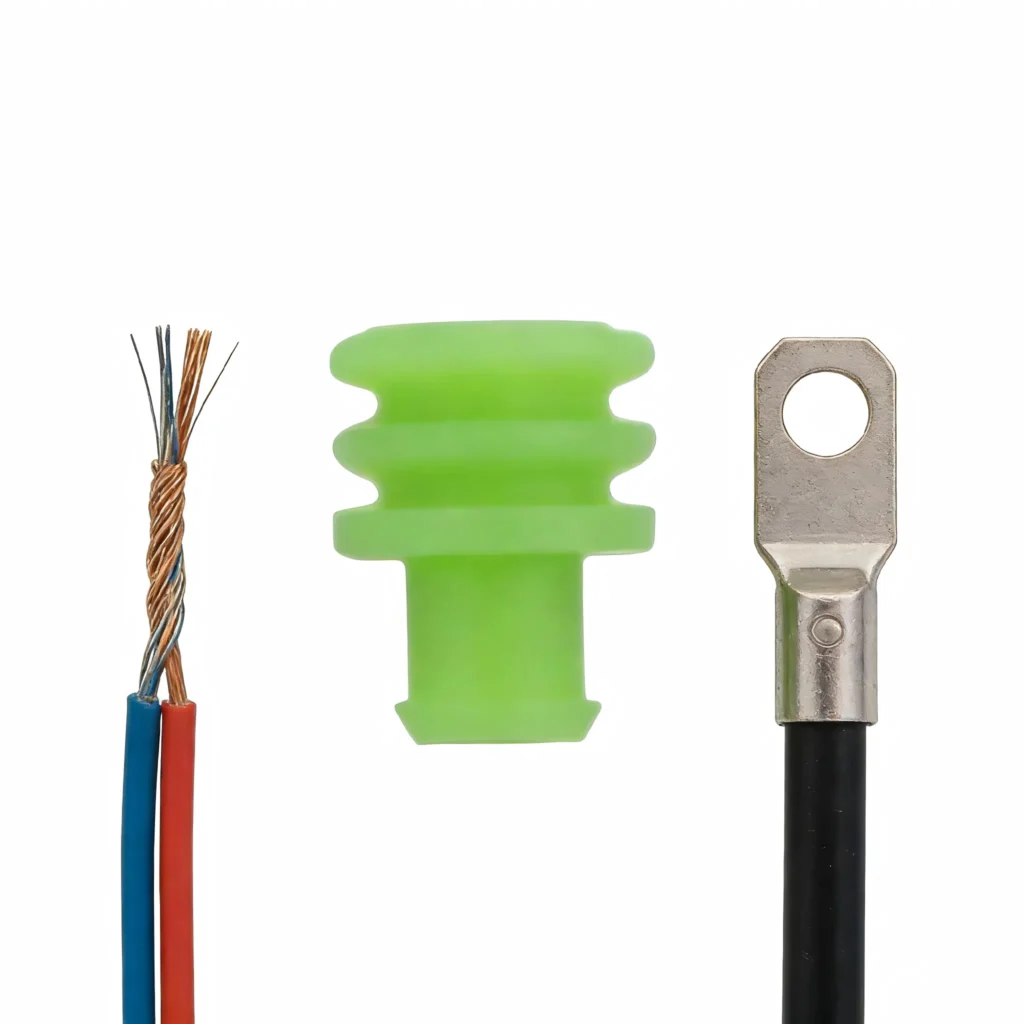
Moisture is the biggest potential hazard in electrical engineering and vehicle maintenance. Even micron-sized water droplets entering the connector may cause corrosion, short circuit, and eventually cause system failure. This is the reason why a single wire seal has become an essential part of electrical wiring.
This article will discuss the mechanical principle, material selection and installation required for waterproof connection. We ‘ll answer the most pressing questions about these components to ensure your project meets the highest standards of durability.
What Is a Single Wire Seal?
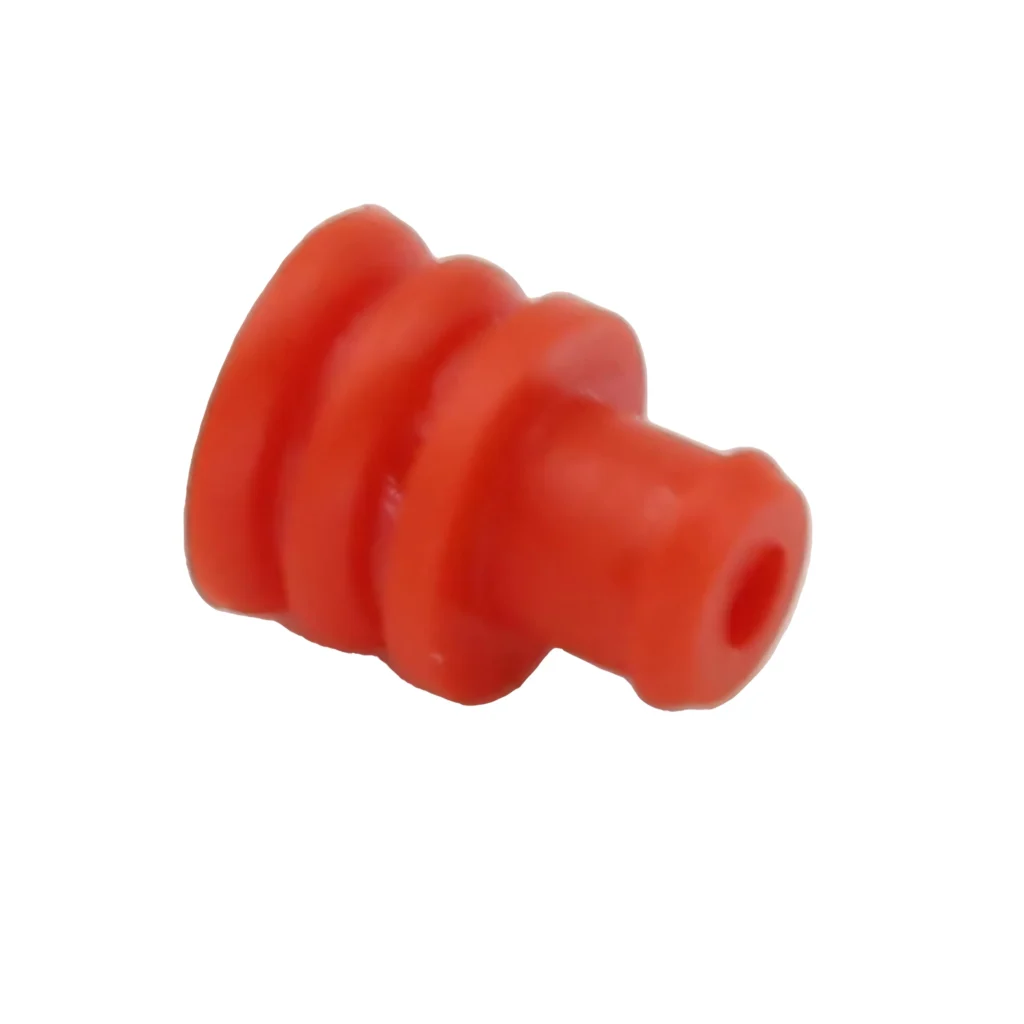
A single wire seal (SWS) is a self-lubricating isolation component, usually made of silicone or rubber – used to attach a wire to a single wire before the wire is crimped to the terminal. It can form a compression fit in the hole of the connector housing.
When the terminal is inserted into the connector sheath, the single wire seal compresses the hole wall and the wire insulation layer at the same time. This double compression creates an airtight and watertight barrier that effectively prevents environmental contaminants such as water, oil, dust and fuel from corroding electrical contacts.
Why Are They Essential?
Ingress Protection: They enable connectors to achieve extremely high IP ratings (typically IP67 or IP6K9K).
Vibration Damping: The rubber material can absorb small vibration and reduce Fretting corrosion.
Stress Relief: They provide a certain mechanical support for the wire inlet point.
The Analysis of a Single Wire Seal
Most of the single wire seals are designed with a ribbed.
Internal Ribs: Firmly grasp the wire insulation layer to prevent the seal from slipping during the assembly process.
External Ribs: Press the inner wall of the connector sheath to block the moisture path.
Color Coding: The manufacturer usually color-codes the sealing plug according to the suitable wire diameter range (e.g., green corresponds to 20-22 AWG, and blue corresponds to 16-18 AWG).
Material Comparison: Silicone vs. EPDM
In order to optimize the system performance, you need to select the appropriate material for the single wire sea. Here is a comparison of common materials:
| Comparison Table:Silicone vs. EPDM | ||
|---|---|---|
| Feature | Silicone Rubber | EPDM (Ethylene Propylene Diene Monomer) |
| Temperature Resistance | Excellent (-60°C to +200°C) | Good (-40°C to +125°C) |
| Oil/Fuel Resistance | Moderate (depends on grade) | Poor (swells in oil/gas) |
| Flexibility | High (maintains seal in cold) | Moderate |
| Cost | Higher | Lower |
| Best Use Case | Engine bays, high-heat areas | Interior cabin, general purpose |
Note: For automotive engine applications, a silicone- based single wire seal is usually preferred due to temperature fluctuations.
How to Install a Single Wire Seal Correctly?
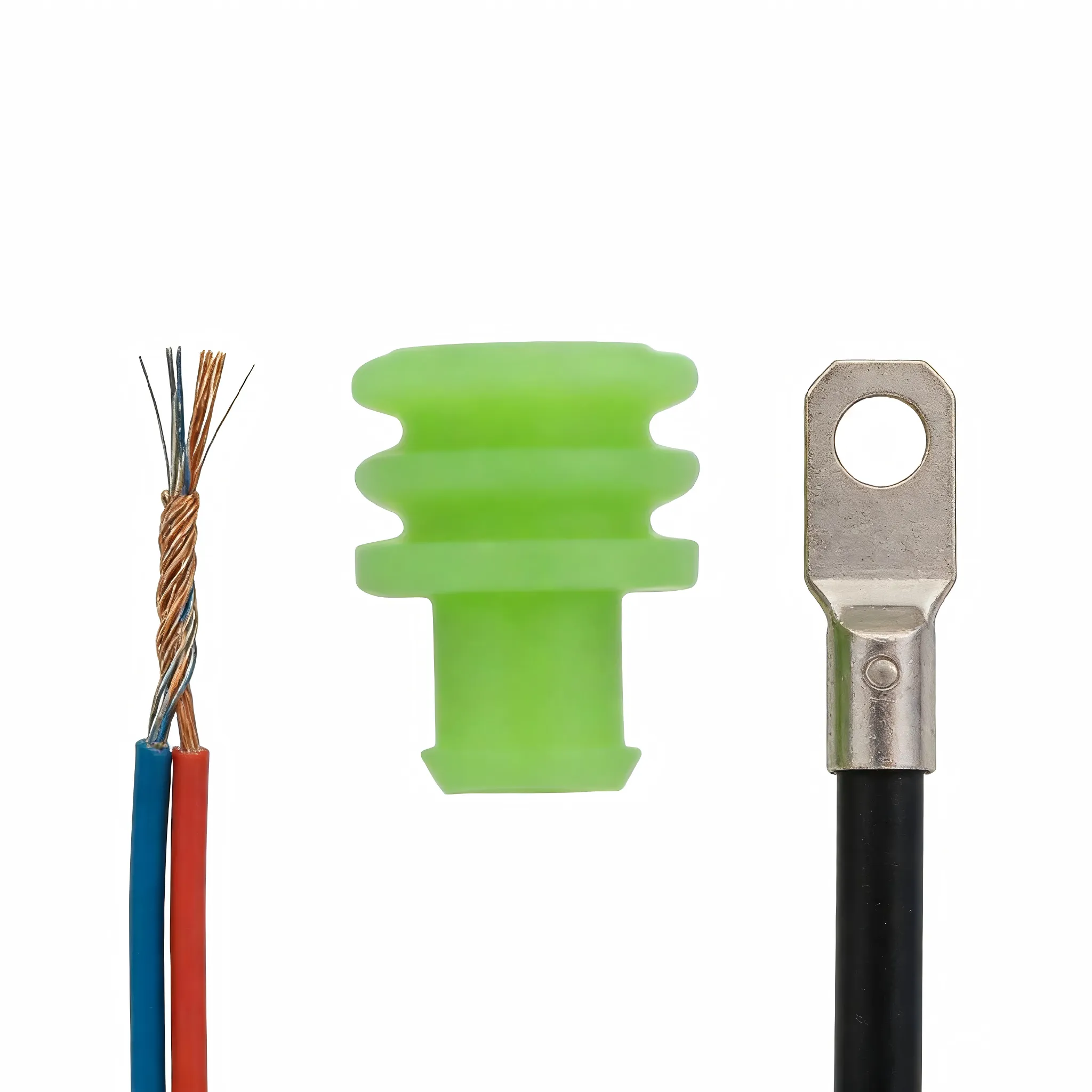
Improper installation is the main cause of seal failure. Please follow the following step-by-step process to ensure that your waterproof sealing achieves a perfect ‘F-crimp‘.
Step 1: Strip the Wire
Peel the wire insulation (usually 4mm to 5mm) at the length specified by the terminal manufacturer. Remember not to damage the copper wire.
Step 2: Insert the Seal
Before crimping, slide the single wire seal onto the wire. The narrower end of the seal should be toward the tip of the wire, and the wider/ribbed end should be backward.
TIANDIAN team tip: Adjust the position of the seal to align its edge with the edge of the insulating layer. Do not push the seal onto the exposed copper wire.
Step 3: Place the Terminal
Place the terminal on the wire. The copper wire should be located in the conductor crimping zone, and the single wire seal should be located in the insulation crimping zone (usually called the insulation gripper).
Step 4: Crimp the Assembly
Use specialized crimping tools (such as Weather Pack crimping pliers):
- The conductor crimping wing is pressed on the exposed copper wire.
- Press the insulated crimping wing on the single wire seal.
Warning: The crimp shape on the seal should be round and tight, and should not be flattened. If the seal is punctured, the waterproof performance will fail.
Step 5: Insert the Connector
Push the crimped wire and seal assembly into the connector sheath until a ‘click’ is heard. The seal should be completely or partially submerged into the hole to form an interference fit.
Common Mistakes with Single Wire Seals
In order to ensure that your single wire seal performs as expected, please avoid the following common errors:
- Wrong Size Selection: the use of too large seal for wire diameter will lead to gap, so that water will produce siphon effect ; using too small a seal will tear during installation.
- Over-Crimping: Crushing will destroy the elasticity of rubber. The insulating wing of the terminal should be wrapped around the sealing to fix it, rather than cut into it.
- Lubricant Contamination: Although some seals are pre-coated with silicone oil to facilitate insertion, the addition of incompatible greases (e.g. Vaseline on EPDM) degrades the rubber.
- Backwards Installation: Reverse installation of the seal will prevent it from being correctly fixed in the sheath hole position.
Comparison: Single Wire Seal vs. Matte Seals
You may encounter two main sealing strategies in modern automotive engineering. Understanding the difference between the two helps to choose the right components.
Single Wire Seal (SWS)
Application: Applied to each wire before insertion.
Pros: Excellent maintainability ; you can remove a single wire without interfering with other wires. Very suitable for custom wiring harnesses.
Cons: For high-pin connectors, the assembly time is slow.
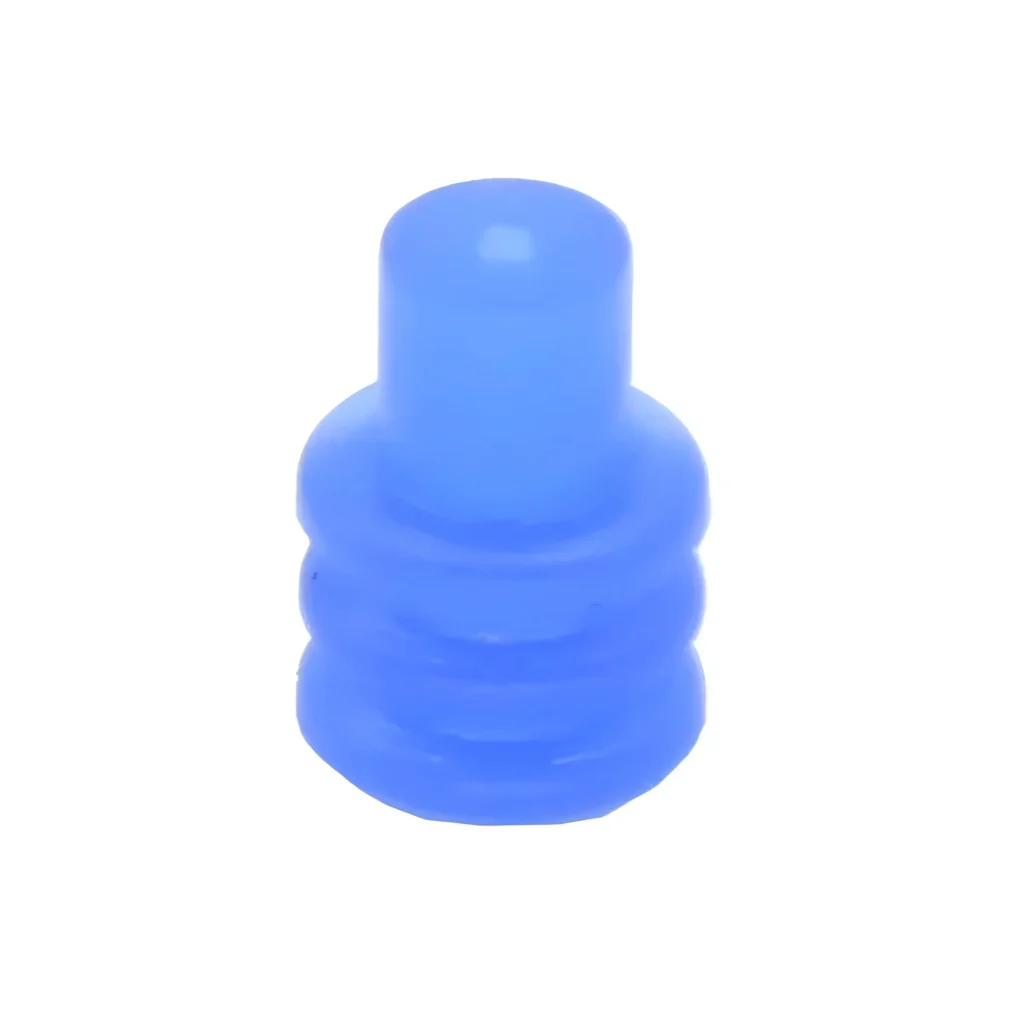
Matte Seal (Block Seal)
Application: A piece of rubber located in the back cover of the connector, the wire directly through the pre-punched hole.
Pros: Faster manufacturing and assembly speed.
Cons: Difficult to repair. If the assembly seal ring is torn, the entire connector sheath usually needs to be replaced.
For after-sales maintenance, customized modification and heavy equipment maintenance, single wire seal is still a better choice due to its superior maintainability.
Advanced Applications and Industries
Although the single wire seal is most often associated with automotive wiring, it is also widely used in various industries:
- Marine Electronics: Protect bilge pumps and navigation lights from salt water corrosion.
- Agricultural Machinery: Tractors and combine harvesters use these seals to resist dust and fertilizer chemicals.
- Renewable Energy: Solar panel connectors (MC4 style) usually use variants of the single wire seal principle to survive in outdoor environments for decades.

For more information on standard IP ratings and how they apply to electrical connectors, you can refer to the IEC 60529 Standard.
Conclusion
Although the single wire seal is small in size, it has a great responsibility: as the last line of defense between fragile electrical contacts and harsh environments. As described above: By selecting the correct material, matching the size of the wire insulation layer, and using the correct crimping technology, you can ensure the life and safety of the electrical system.
Whether you’re rewiring an old car or designing an industrial control panel, never underestimate the value of a high-quality single wire seal. It is the most cost-effective insurance in your cabling project.
The thinner part should be oriented toward the terminal, while the thicker part should be oriented toward the extension of the wire.
When you insert the terminal into the connector housing, the thicker part of the sealing ring needs to be close to the inner wall of the housing to play a waterproof role. If it is reversed, it cannot slide into the connector hole or form an effective seal.
Yes, but it depends on which part of the terminal you are crimping. Insulated crimping wings (Wings) should hold the sealing ring gently to fix its position, and should not be pressed too tightly to cause deformation or rupture of the sealing ring, otherwise it will destroy the waterproof performance.
Many users mistakenly think that color is just for good-looking, in fact, the color represents the size specification. The selection of the sealing ring should not only depend on the wire specification (AWG), but also on the outer diameter of the wire insulation layer (Insulation Diameter). Different brands of wires even if the core thickness is the same, the thickness of the skin is also different.
Don ‘t just plug a Single Wire Seal with a hole in an empty hole. You should use a dedicated blind plug / blind plug (Cavity Plug/Blind Plug)
Although it ‘s OK in an emergency, it ‘s strongly not recommended.
The rubber material will undergo “compression set” after long-term compression and lose resilience. In addition, when the old single wire seal is removed from the terminal, it often causes a small tear that is difficult to detect by the naked eye. In order to ensure the reliability of the connection, a few cents of the sealing ring is not worth taking the risk of circuit corrosion.