
Every modern vehicle is a rolling computer, packed with dozens of modules that constantly exchange information. Each of these systems—from headlights to transmission control—depends on a secure, reliable connection. That’s where connectors come in.
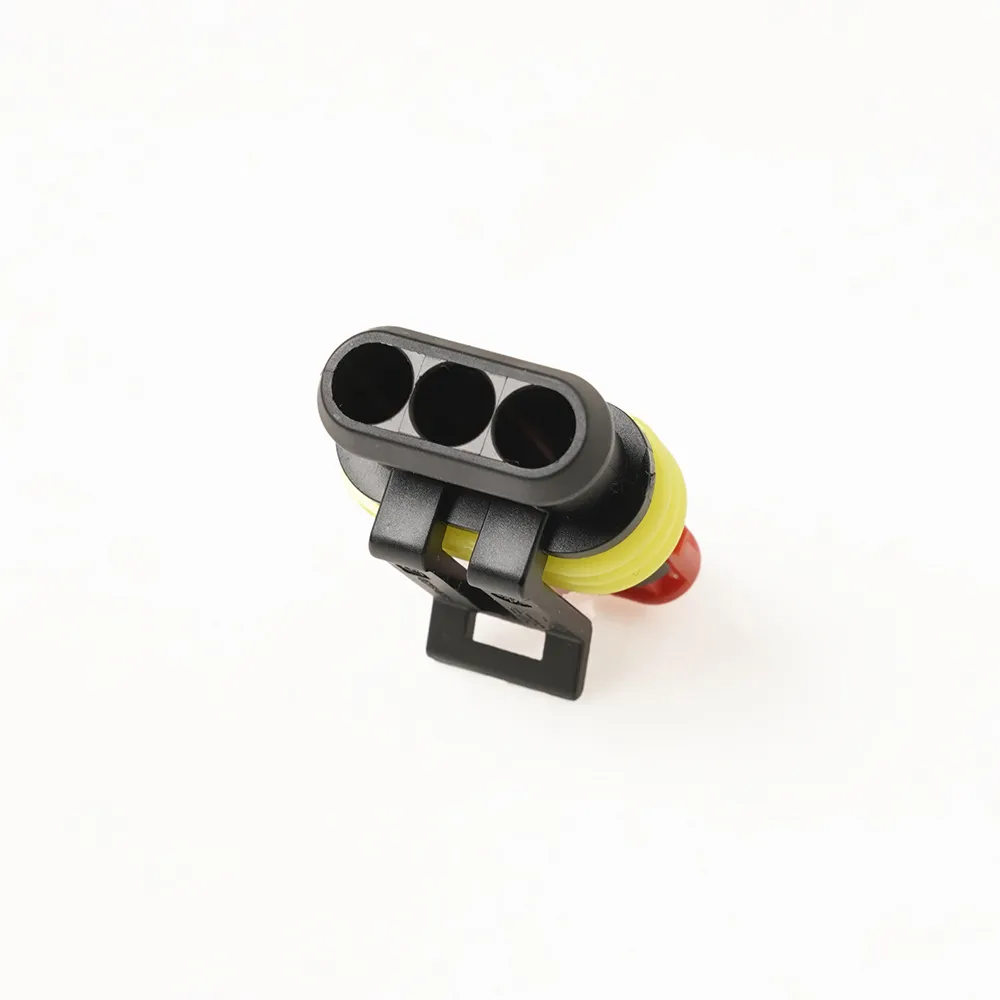
Among the many connector types, 3-pin connectors (also called 3-Cavity connectors) punch above their weight. They are small, affordable, and easy to overlook, but they quietly safeguard vehicle performance by ensuring power, grounding, and signal transmission happen without interruption. If you’ve ever wondered why a car starts smoothly in the morning, or how your engine control unit receives clean sensor data, a 3-pin connector probably had something to do with it.
About 3-Pin Connectors
A 3-pin connector joins three separate electrical paths into one neat, compact plug:
- Power (positive line) – provides voltage to the component.
- Ground (negative return) – completes the circuit safely.
- Signal or data line – carries commands, measurements, or feedback.
This structure gives 3-pin connectors a functional edge. Unlike simpler 2-pin connectors, which only deliver power and ground, the third pin allows for data flow.
Where you’ll find them in vehicles:
- Lighting assemblies – connecting fog lamps or DRL modules.
- Engine sensors – coolant temperature sensors, throttle position sensors.
- Motors and actuators – such as cooling fans or valve actuators.
ECU communication lines – linking control modules.

Advantages of 3-Pin Connectors
Signal Integrity and Interference Resistance
Today’s vehicles are electromagnetic jungles. Multiple ECUs, radios, and even driver-assist systems all generate electrical “noise.” Without proper separation of ground and signal, this noise can distort sensor readings.
A 3-pin connector solves this problem by isolating the signal. For example, in fuel injector wiring, the ECU relies on microsecond-accurate signals to control injection timing. A weak or noisy connection could cause engine knock or higher emissions. By keeping the signal line distinct, 3-pin connectors ensure precision is preserved.
Reliability and Durability in Harsh Environments
Automotive environments are brutal: extreme heat under the hood, freezing temperatures in winter, constant vibration on the road, and exposure to water, dirt, and salt. 3-pin connectors are designed with locking mechanisms, seals, and corrosion-resistant materials to handle this abuse.
In off-road vehicles, waterproof 3-pin connectors protect engine sensors even when the vehicle is submerged in mud or water. Military-grade designs, such as Delphi GT series connectors, are rated for temperatures up to 150°C and maintain conductivity even after repeated shock and vibration testing
Ease of Installation and Maintenance
3-pin connectors are designed with technicians in mind. Their plug-and-lock design means no special tools are required, and replacement is quick. This reduces downtime in both professional workshops and DIY garages.
Take the example of an oxygen sensor replacement. A faulty sensor can be unplugged and replaced with a new one in under ten minutes. Without connectors, this job would require soldering wires—a slower, riskier process prone to human error. For fleet operators or repair shops, these time savings translate directly into lower costs and faster service turnaround.
Applications in Vehicle Electrical Systems
You’ll find 3-pin connectors almost everywhere once you start looking. Here are some common applications:
- Lighting systems – powering and controlling LED drivers, fog lamps, and brake lights.
- Engine sensors – oxygen, MAP, throttle position, or coolant sensors.
- Actuators – electric fans, EGR valves, or idle air control motors.
- ECU networks – linking control units that require data-rich communication.
Why Choose 3-Pin Connectors?
Connector selection is a multi-faceted decision, prioritizing a harmony of speed, lasting integrity, and economical operation over time. Here’s why 3-pin connectors often win:
- Versatility – These connectors go beyond simple power transfer to include data connectivity, setting them apart from their more limited 2-pin counterparts.
- Safety – separate ground and signal reduce the risk of shorts or false readings.
- Scalability – as vehicles add advanced sensors (like EV battery monitoring), 3-pin connectors provide room for more complex circuits.
- Cost-effectiveness – while more expensive than 2-pin, they prevent costly breakdowns and speed up repairs.
In short, engineers and mechanics favor 3-pin connectors because they provide a reliable middle ground: smarter than basic plugs, but not as bulky or complex as multi-pin harnesses.
3-pin connectors may not look impressive, but they underpin some of the most critical systems in modern vehicles. By combining power, ground, and signal in one secure package, they guarantee clean communication, stable power, and safer operation across the vehicle. As vehicles get smarter—with electrification, driver-assist systems, and tighter emissions standards—the demand for robust, versatile connectors will only grow.