

With quarterly revenue surpassing $10 billion and orders reaching $12.2 billion, connector giant Amphenol is still expanding its room for growth.
On November 13, industrial real estate developer LŌ-GOI Group announced that it had completed a facility lease transaction of approximately 121,000 square meters with an Amphenol subsidiary. The project is located in Bac Ninh Province, Vietnam, has been delivered, and will now undergo interior fit-out before being brought into operation in phases.
What can such a large factory produce? The outside world is still waiting for the answer.
But if we look at the timeline more broadly, this is not the only move the interconnect giant has made this year: in China, its Xiamen high-speed cable factory is being expanded; on the business side, the company has acquired fiber-optic interconnect assets and is continuing to increase its investment in areas such as automotive and sensors.
Orders, capacity, and acquisitions are pushing Amphenol toward what new stage?
01
121,000 sqm New Factory Delivered
Continued Investment in Vietnam
According to Vietnam’s Investment Newspaper, the facility leased by Amphenol is LŌ-GOI Yên Phong, located in the Yên Phong area of Bắc Ninh Province, northern Vietnam, and is scheduled to be completed in the fourth quarter of 2025.
The two-story industrial building has a leasable floor area of approximately 121,000 square meters, with a clear height of about 10.5 meters on each floor. The developer plans to install rooftop photovoltaic facilities with a capacity of up to approximately 6 MW for the project, supplying renewable electricity to Amphenol.
The 121,000-square-meter footprint is substantial. Amphenol has grown rapidly in the AI data center sector in recent years, but because the specific products and customers for this lease have not yet been disclosed, it cannot yet be directly called an “AI connector-only factory.”
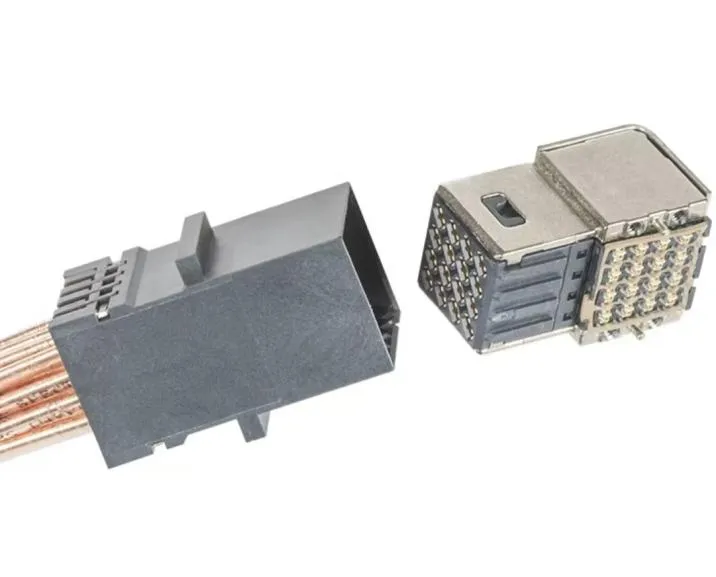
What is clear is that northern Vietnam has already attracted a growing cluster of electronics manufacturers and their suppliers. This is also not the first time Amphenol has expanded into Vietnam.
In 2024, contractor Delta E&C disclosed that Amphenol JET, a subsidiary of Amphenol, was advancing an electronics components factory project in northern Vietnam, with a total site area of more than 30,000 square meters.
For Amphenol, whose product portfolio spans the globe, gaining more space in this region will help it arrange manufacturing and delivery more flexibly going forward.
02
Vietnam Steps Up
Chinese Factories Are Also Expanding
The launch of new projects in Vietnam has raised a question widely followed across the industry: does increased overseas capacity mean that the role of China-based factories is being diminished?
According to a March 2026 report by Fujian Daily, in response to growing orders for high-speed cables, Amphenol’s Xiamen cable business had previously added about 20,000 square meters of factory space and multiple intelligent assembly lines, expanding its production capacity by nearly 30%.
The keyword for the Xiamen plant is high-speed cables.
As AI data centers place higher demands on data transmission capabilities, high-speed cables and connectors together form a key interconnection component between servers, switches, and racks. As product specifications are upgraded, suppliers’ local delivery capabilities must keep pace.
Meanwhile, Amphenol’s RF division issued a product change notice in March 2026, stating that the production locations of certain products listed in the notice would be shifted from China to a new facility in Vietnam, while the appearance, function, and quality of the related products would remain unaffected.
Taken together, Amphenol management’s remarks at an investor meeting were closer to the full picture: China remains an important manufacturing region for the company, while the company is also diversifying its footprint in Southeast Asia, India, Mexico, and other regions.
For a connector giant, capacity deployment is not a simple either-or choice. Different products face different customer requirements and production processes. What Amphenol is truly expanding is a global delivery network that can be flexibly adjusted according to order conditions.
03
Six-Month Report and Third-Quarter Report: Orders Continue to Climb
Why are manufacturing and delivery capabilities attracting so much attention? A look at Amphenol’s 2026 financial report offers part of the answer.
In the third quarter of this year, Amphenol’s quarterly orders rose to $12.2 billion, with quarterly orders-to-revenue ratio at 1.19. In the first three quarters, the company recorded total revenue of approximately $26.608 billion, up about 60% year on year.
Where is the growth coming from?
Amphenol said at its third-quarter earnings call that the IT data communications market accounted for about 48% of quarterly sales, with sales in that market up about 117% year on year and organic growth of about 77%. Management explicitly noted that AI-related business accounted for about three-quarters of IT data communications sales.
In addition, Amphenol’s overall revenue grew 65% in the third quarter, with overall organic growth of 37%. Market demand and consolidation of acquired businesses are both driving revenue expansion.
Whether leasing large facilities in Vietnam or expanding production lines in China, these are essentially proactive preparations by Amphenol to ensure new product validation, capacity expansion, and on-time delivery in the face of rapidly growing market demand.
04
Continued M&A
Extending into System-Level Interconnect Solutions
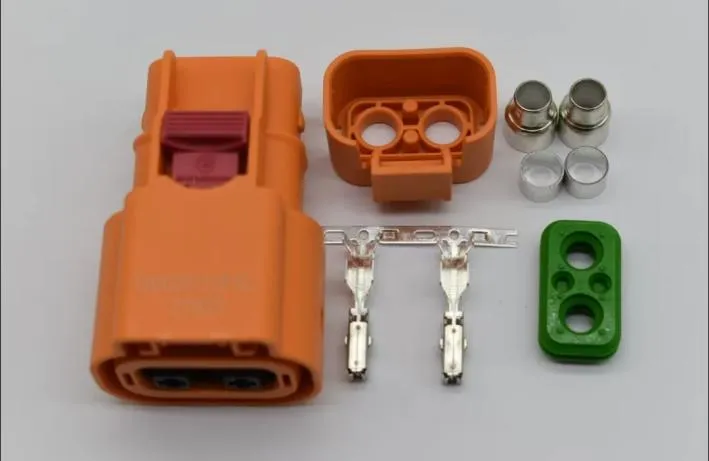
If one looks only at the factory, it is easy to underestimate Amphenol’s moves this year.
Since 2026, the connector giant has continued to expand its product portfolio and customer coverage through acquisitions. Among them, the CCS business is a deal worth watching.
Amphenol said the acquisition added fiber-optic interconnect capabilities for IT data communications and communications networks, as well as industrial interconnect products related to building infrastructure.
From high-speed copper cables and power connections to fiber optics and sensors, what Amphenol is expanding is the coverage of its interconnect products.
However, not all M&A transactions have been completed. In its third-quarter report, Amphenol said the transactions related to AdvancedPCB, Dexgreen and Humanetics Sensors still need to satisfy regulatory approvals and other conditions, and have not yet been completed.
As it expands production capacity while acquiring businesses, Amphenol’s development path reflects a current trend in the interconnect industry: when customers no longer need just a single connector, but comprehensive products covering high-speed copper cables, power connections, fiber optics and cables, suppliers’ product portfolios and full-solution delivery capabilities will directly affect the depth of their involvement in projects.
Conclusion
From $10.7 billion in orders in the second quarter to $12.2 billion in the third quarter; from the acquisition of its fiber-optic interconnect business to the delivery of a large facility in Vietnam, Amphenol’s moves this year have all pointed toward the same goal: preparing for larger-scale and more diverse interconnect demand.
This is also changing the competitive boundaries of the connector industry.
In the past, whether a product could meet customer requirements was the first threshold for entering a supply chain. But as data transmission speeds, power density, and order volumes continue to rise, what companies need to answer is whether different interconnect solutions can be supported in a timely manner and whether products can be delivered at scale and with stability worldwide.
What role the 121,000-square-meter facility in Vietnam will ultimately play remains to be seen. But from Xiamen, China, to northern Vietnam, as order volumes enter a new magnitude, the competition among connector companies has expanded from technological breakthroughs in individual products to the responsiveness and delivery resilience of the entire supply network.