

AI computing power is heating up, and connector companies are eyeing liquid cooling.
Dingtong Technology has begun normal shipments of its liquid cooling products and is continuing to expand capacity; Yidong Electronics plans to further acquire a 29% stake in Shenzhen Guanding Metal; and Lens Technology has completed its controlling acquisition of Liminda. Overseas giant Molex is also stepping up its investment in liquid cooling technology.
From independent R&D to mergers and acquisitions, connector companies are making concentrated bets on liquid cooling. But how much growth potential does this new track really have? And what hurdles must companies clear to turn their positioning into real revenue?
01
Why are Connector Companies Collectively Betting on Liquid Cooling?
The core drivers are the upgrading demand for heat dissipation in AI servers and connector companies’ competition for new growth.
An engineer at a testing company told International Wire & Cable that, as high-power GPUs and high-density servers increase, traditional air-cooling solutions are facing challenges in heat dissipation efficiency, space utilization, and energy consumption.
Cold-plate liquid cooling uses coolant to carry away heat from chips, providing a new heat dissipation solution for high-density computing equipment and driving demand for products such as liquid cooling connectors, manifolds, and cold plates.
Among them, quick disconnects (UQDs) are responsible for connecting and disconnecting the liquid circuit, requiring not only the circulation of coolant but also sealing performance and reliability after repeated plug-and-unplug cycles. Manifolds handle the distribution and collection of coolant, while cold plates absorb heat generated by chips and other components.
These products offer connector companies an entry point. Existing capabilities in precision machining, material control, sealing design, and mass production can serve as the foundation for companies expanding into the liquid cooling business.
However, technical accumulation does not mean that companies can directly replicate their experience with existing products. Liquid cooling connectors must also meet requirements such as coolant compatibility, leak control, pressure and temperature changes, and long-term operational reliability, and customer validation remains a key threshold for entering the supply chain.
Compared with independent R&D, some companies have chosen to accelerate their market entry through capital operations.
In November 2025, Yidong Electronics approved a plan to acquire a 51% stake in Shenzhen Guanding Metal, with a transaction value of RMB 61.2 million. On January 29, 2026, the acquisition was completed with the industrial and commercial registration change, and Guanding Metal was officially included in the company’s consolidated financial statements; In September 2026, the company further proposed acquiring a 29% stake in the target for RMB 116 million, which would increase its shareholding to 80% upon completion of the transaction. Guanding Metal mainly provides structural components and comprehensive solutions for the AI computing power liquid cooling and heat dissipation sector.
Lingyi iTech, meanwhile, acquired a 35% stake in Liminda for RMB 875 million and obtained voting rights corresponding to an additional 17.78% stake through a voting rights entrustment, thereby gaining control of Liminda. Its products cover server thermal management hardware such as UQDs, liquid cooling manifolds, and cold plates.
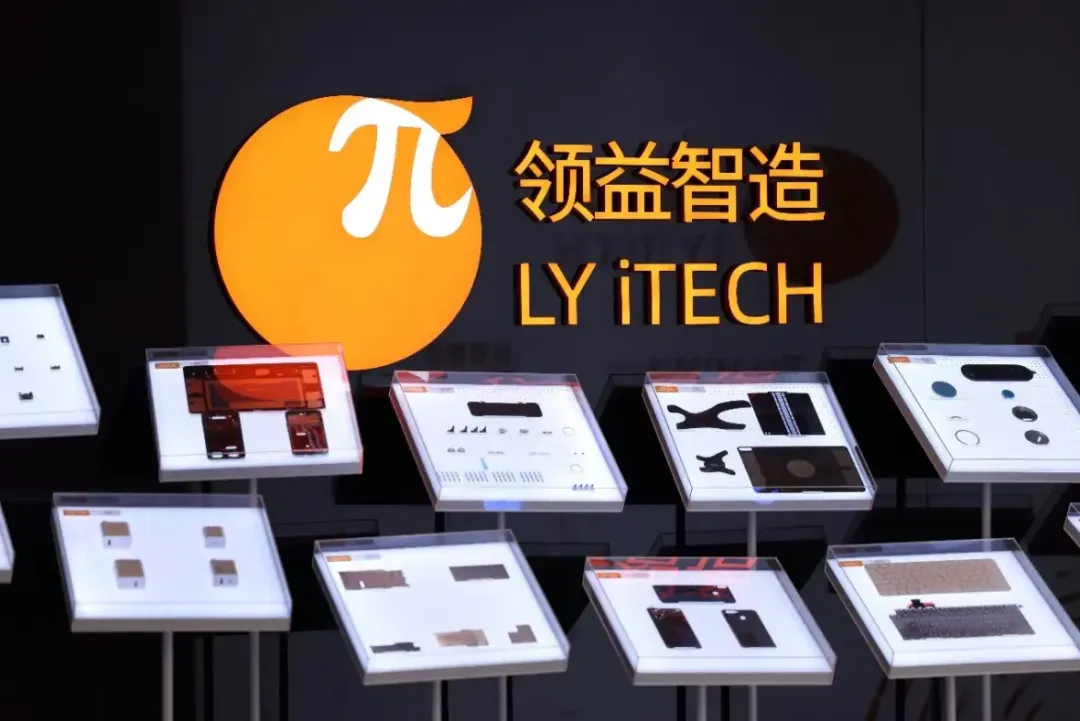
The commonality between the two companies is that they are using investment and M&A to rapidly acquire products, manufacturing capabilities, and customer resources, reducing the time cost of building businesses from scratch.
For traditional connector and precision manufacturing companies, liquid cooling is both an opportunity to expand product boundaries and a way to secure a larger share of customer supply.
02
As the Liquid Cooling Market Heats Up, Who Will Truly Capture the Upside?
Although the approaches to entering the market differ, the key to whether a company can benefit is not whether it has entered the track, but whether its products can pass validation, generate stable orders, and achieve scaled delivery.
Based on current deployments, companies are mainly pursuing three paths: independent R&D, M&A integration, and expanding products through existing customers.
Independent R&D enables companies to gradually expand their product portfolios based on their own technological accumulation. In its September 2026 investor relations event, Shenglan Electronics said its liquid cooling products are mainly targeted at data center scenarios and include core supporting components such as UQDs and cold plates, with some products already supplied in small batches. Subsequent capacity planning will be advanced in line with customer validation progress, order demand, and market pace.
The key to this path lies in whether R&D outcomes can be converted into sustained orders, and whether companies can improve manufacturing efficiency and control costs through product iterations.
The advantage of M&A is that it shortens the time to market. The liquid cooling business involves customer certification, mass production experience, and accumulated supply chain relationships. Acquiring companies with an existing business foundation can help listed companies more quickly fill gaps in product capabilities. However, M&A also means higher capital investment, and whether customer, technology, and production resources can be integrated afterward will directly affect investment returns.
The third path is to expand supporting products through existing customers.
Yidong Electronics mentioned in its 2026 investor relations event that cages compatible with liquid cooling solutions have already been shipped, and integrated cage and liquid cooling solutions are also being advanced. For companies with existing AI server or optical communications customer resources, adding product categories around existing customers is expected to reduce some market development costs.
A connector industry practitioner who wished to remain anonymous said, “Customer overlap does not mean products can directly enter the same procurement system.” Different products still have their own technical standards, certification processes, and supplier requirements, and existing customer resources cannot replace product competitiveness.
Moves by overseas giants show that the competitive landscape is expanding from single connectors to broader thermal management capabilities.
Molex announced a strategic investment in CAE Plus in August 2026 to advance active liquid cooling technologies for AI and high-performance computing data centers. Amphenol has also deployed a product series of UQD liquid cooling connectors for applications such as data centers and AI platforms.
This means that connector companies face not only peers but also specialized thermal management companies, liquid cooling system suppliers, and manufacturers with system integration capabilities. As customers raise requirements for thermal management systems, companies’ competitiveness will no longer be limited to single components, but will extend to multiple aspects such as product performance, system compatibility, mass production delivery, and cost control.
03
Under the Liquid Cooling Boom, What Other Barriers Remain?
First, there is the balance between capacity expansion and real demand.
In Li Yiping’s view, from the announcement of a strategic move and product sampling to small-batch supply and scaled profitability, the liquid cooling business still needs to go through multiple stages. Fully liquid-cooled servers have not yet entered the mass deployment stage. At the current stage, the value is greater for solution integrators. Liquid cooling connectors account for a relatively small share of server value, so their contribution to output value and profit growth is limited. However, entering the liquid-cooled server track from this position has good prospects.
Therefore, whether a company can benefit should not be judged solely by the amount of investment and the scale of production lines. It is also necessary to consider whether production capacity is supported by clear customer demand and whether the company can continue to ship products after production begins.
Second, there are risks related to technological iteration and customer certification.
Liquid cooling is not a single technology route. Different system architectures have different requirements for connection methods, flow rates, maintenance, and reliability. If a company overbets on a particular product form and customer solutions or technical standards change, its R&D investment and newly added equipment may face issues such as a longer payback period and insufficient utilization.
At the same time, liquid cooling systems place high demands on the sealing performance and long-term reliability of connectors. Once a leak occurs, the impact may extend to servers and other expensive equipment. Whether products can withstand long-term operation, repeated plugging and unplugging, and different operating conditions will directly affect whether customers expand their purchases.
Finally, there is the question of whether high investment can be converted into actual profits.
R&D expenses, equipment depreciation, customer certification costs, fluctuations in raw material prices, and subsequent price competition may all erode the profit margin of the liquid cooling business. For companies that enter the track through mergers and acquisitions in particular, securing business and products is only the first step. Whether subsequent order growth, profitability, and synergies can be realized is the key to investment effectiveness.
In the documents related to the acquisition of Guanding Metal’s equity disclosed by Yidong Electronics in September 2026, risks such as competition in the liquid cooling industry, changes in downstream customers’ capital expenditures, technological iteration, and the release of synergies falling short of expectations were also highlighted.
This shows that capital operations can help companies enter the market more quickly, but they cannot guarantee demand growth, nor can they be directly equated with investment returns.
Conclusion
From Yidong Electronics and Lingyi iTech expanding through M&A to Molex extending into thermal management, liquid cooling is emerging as a new growth direction worth watching in the connector industry chain.
But whether companies can truly benefit ultimately depends on progress in customer validation, stable supply, mass production, and the realization of profits.
For connector companies, liquid cooling offers new growth opportunities, but it is not a shortcut that bypasses the need for technological accumulation and sound operations management. Only companies that can truly integrate precision manufacturing capabilities, customer resources, product reliability, and system-level synergy will be better positioned to establish a foothold in this round of industry transformation.