
01
Confronting the Physical Limits of High Thermal Density and Ultra-Fast Data Transfer in AI
In the fields of AI servers and supercomputing data centers, the geometric growth in GPU cluster and switch chip throughput has pushed power density per rack beyond 100 kW. This extreme heat density renders traditional air-cooling systems entirely ineffective, forcing the industry to shift comprehensively toward cold-plate liquid cooling and immersion liquid cooling architectures. However, the adoption of liquid cooling introduces new challenges: first, space constraints—liquid cooling tubing fills the racks, leaving minimal room for data interfaces and cabling. Second, medium differences arise; in immersion cooling, the dielectric constant of the coolant differs significantly from that of air. How to route cables effectively within dense equipment configurations and maintain signal stability in this specialized cooling medium has become a key focus for breakthroughs in current data center interconnect technologies.
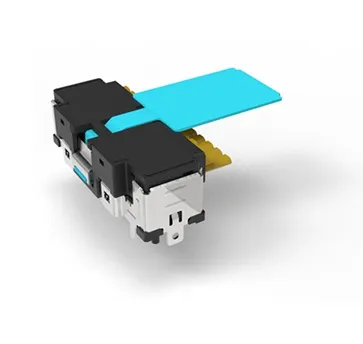
Faced with the complex thermal management structure inside AI servers, TE Connectivity (Booth No.: W1.305) presents its liquid-cooled I/O interconnect solution and ultra-thin PCIe Gen 7 connector system designed for high-performance computing equipment. This solution enables the high-speed data transmission promised by PCIe Gen 7, achieving up to 128 GT/s PAM4 when using the PCIe protocol. With a height of less than 9 millimeters, the product can be installed in previously inaccessible tight spaces such as beside CEM connector slots, beneath heat sinks, or near chips. A central sideband facilitates PCIe signal transmission, ensuring optimal signal integrity and performance. Additionally, this is a versatile platform product that covers major PCIe use cases, including X4/X8/X16 configurations and various applications such as right-angle, straight, and lateral connections.
To address the challenges of high-frequency signal transmission in immersion liquid cooling environments, Amphenol (Booth No.: W1.505) has introduced the specially engineered EXAMAX2® ARK series of high-speed connectors. Traditional exposed contacts experience increased parasitic capacitance when submerged in cooling media such as fluorinated liquids or synthetic oils, which can degrade eye diagram opening for high-frequency signals like 112G PAM4.

The EXAMAX2® ARK system overcomes this by improving the sealing structure at the terminal contact interface and incorporating highly compatible corrosion-resistant plating along with specialized insulating plastic materials, effectively minimizing interference from coolant on transmission impedance. This technical solution ensures that computing equipment maintains stable data throughput rates from 112Gb/s to 224Gb/s even under full immersion cooling, successfully resolving the issue of signal channel attenuation caused by changes in underlying hardware cooling methods.
With the large-scale upgrade of data center networking equipment, interface density on switch panels has increased significantly, leading to heightened thermal management challenges. Yihua Co., Ltd. (Booth No.: W1.321) introduces its new generation of QSFP-DD and OSFP high-speed interface components.
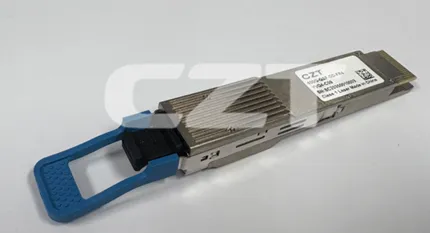
To address signal interference caused by ultra-high bandwidth, the product features an optimized internal shielding structure that greatly enhances electromagnetic interference resistance, ensuring signals between adjacent interfaces do not interfere with each other. More importantly, Yihua has directly integrated a custom high-efficiency heat sink into the connector, enabling rapid dissipation of substantial heat generated during operation, effectively preventing network slowdowns or system crashes due to overheating.
02
Balancing 800V High-Voltage Safety with Massive Concurrent Vehicle Data
Currently, the electronic architecture of new-energy vehicles is rapidly evolving along two main trends. The first is “high-voltageization.” To enable ultra-fast charging, vehicle platforms are upgrading to 800V or even higher voltages. This requires connectors not only to withstand high currents but also to offer exceptional insulation and heat resistance, while preventing electromagnetic interference. The second trend is “intelligentization.” With the widespread adoption of autonomous driving technologies, in-vehicle sensors such as cameras and radars generate massive amounts of data daily. This demands that onboard networks transmit this information quickly and without delay. Therefore, connectors must ensure stable, high-speed signal transmission under complex conditions involving continuous vehicle vibration and extreme temperature fluctuations, while also being designed for lightweight and compact structures.
In the high-voltage architecture design of new energy vehicles, traditional busbars and heavy-duty high-voltage cables not only occupy significant chassis space but also directly reduce the vehicle’s range due to their weight. AVIC Optoelectronics (Booth No.: W2.513) has developed the EVH6, a next-generation planar high-current connector specifically designed for vehicle lightweighting and high-voltage interconnection.
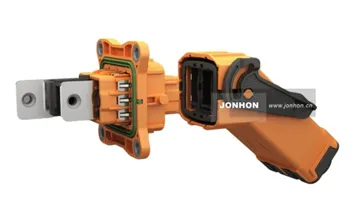
The product features an innovative multi-point contact topology on its internal contacts, effectively reducing contact resistance and minimizing Joule heating during high-current transmission at the source. Thanks to in-depth optimization of structural components and materials, the EVH6 system achieves up to 20% reduction in self-weight while maintaining equivalent current-carrying capacity and mechanical impact resistance, offering a more engineering-feasible lightweight interconnect solution for high-density integration between battery packs (PACK) and high-voltage distribution units (PDU).
Focusing on the safety of high-voltage energy distribution and system-level redundancy, Aptiv (Booth No.: W2.305) presents its 800V bidirectional onboard charger (OBC) high-voltage interconnect system with V2X support, along with a portfolio of high-current low-voltage power distribution products.

On the high-voltage side, its connectors feature precision shielding and high-voltage interlock (HVIL) circuitry, effectively isolating high-frequency radiation generated by silicon carbide power modules during operation. On the low-voltage side, designed to meet the “fault-tolerant and fail-operational” requirements for L3 and higher autonomous driving systems, its high-current low-voltage distribution solution enables millisecond-level dynamic balancing between two independent power rails. This architecture eliminates the critical engineering risk of momentary power loss to key safety loads—such as steer-by-wire, braking, and intelligent driving domain controllers—when a single circuit experiences a short or open-circuit fault.
The large-scale application of battery-swapping models in commercial vehicles and certain passenger vehicle markets poses extreme challenges to connectors’ mechanical lifespan and floating tolerance. At booth W2.321, Amphenol (Ruike Da) showcases its full range of high-voltage, high-current and battery-swap connectors specifically designed for frequent mating and large-tolerance insertion conditions. Equipped with multi-dimensional floating structures, these products absorb physical deviations along the X/Y/Z axes that occur during vehicle-to-station coupling, significantly reducing fretting wear on contact terminals caused by forced insertion and removal, ensuring stable contact resistance even after tens of thousands of mating cycles. Additionally, for autonomous driving data transmission, the company has introduced automotive-grade HSD and FAKRA multi-gigabit Ethernet connector series, which address crosstalk and signal attenuation issues in onboard backbone networks through precise characteristic impedance control, enabling reliable transmission of massive sensor data.
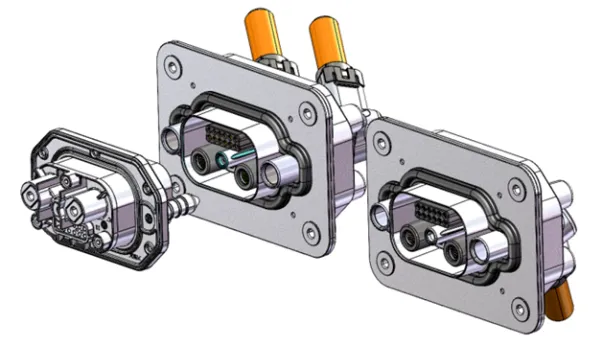
For the battery-swapping mode of new energy vehicles, Ruike’s 12-pin high-current connector series enhances charging and discharging current capacity and application power. While maintaining the original commercial battery-swap national standard interface, it further increases current-carrying capability to meet market demands. This product is an upgraded version of the 12-pin battery-swap connector series, featuring significantly improved current-carrying capacity that complies with national standards for battery-swap connectors and ensures full interchangeability with all existing 12-pin national standard series. Equipped with shielding and enhanced protection performance, it offers multi-angle wiring options to match diverse applications, supporting higher charging and discharging power requirements and higher voltage platforms. It also accommodates multiple wire specifications, delivering a comprehensive user experience for customers. With the rapid increase in the number of in-vehicle sensors, physical space has become the primary constraint for wiring. TE Connectivity (Booth No.: W2.205) is deeply focused on automotive RF and high-speed communication solutions, highlighting its automotive-grade Mini-FAKRA connector system. Compared to traditional FAKRA standard connectors, the Mini-FAKRA reduces size by nearly 80% while maintaining equivalent RF performance and electromagnetic interference resistance. This product supports transmission frequencies up to 20 GHz, specifically designed for direct transmission of uncompressed ultra-high-definition camera data and radar signals. Its extremely compact footprint and tight port spacing address the physical layout challenges faced by in-vehicle computing platforms, enabling integration of dozens of high-frequency signal channels within limited PCB area.
03
Redefining Interconnects to Break Spatial Limits and Tackle Harsh Industrial Environments
In the deep waters of Industry 4.0, miniaturization, modularity of equipment, and comprehensive collection of low-level data have become mainstream trends. Edge sensors in factories are getting increasingly compact, making traditional bulky cables inadequate for wiring. The industry urgently needs miniature interconnect solutions capable of simultaneously transmitting power and data through a single cable. On the other hand, in outdoor photovoltaic and energy storage stations, construction environments are typically extremely harsh. To accommodate more batteries, the internal cabling space within energy storage cabinets is severely compressed. In high-voltage environments reaching up to 1500V, workers struggle to perform complex operations in confined spaces. As a result, connectors that enable quick installation without specialized tools, support blind mating, and feature robust anti-electrocution designs are becoming standard for equipment integrators.
To address the extremely tight wiring space inside photovoltaic power stations and energy storage systems, Molex (Booth No.: W1.301) has introduced the SideWize series of high-voltage, high-current connectors.
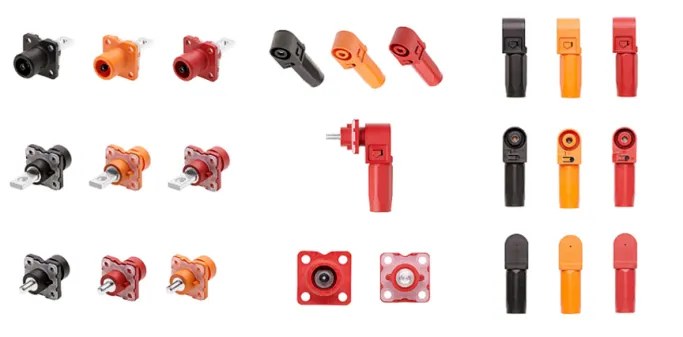
Traditional high-voltage thick cables are too rigid, requiring substantial bending clearance during installation, which wastes cabinet space and increases the risk of cable compression. The SideWize series supports up to 1500V voltage and 80A current, and features an innovative “side-entry” design that eliminates the need for cable bending space altogether. Additionally, the product comes standard with robust anti-electrocution protection and misinsertion prevention, enabling more equipment to fit within energy storage cabinets while ensuring the safety of on-site installers and maintenance personnel.
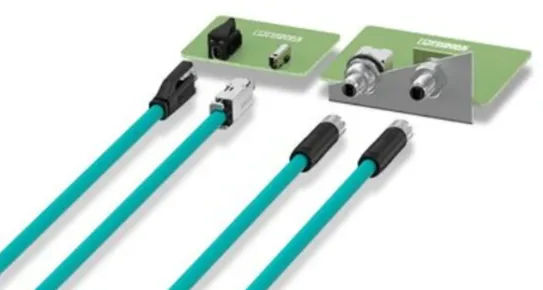
To enable industrial equipment to connect to networks more conveniently, Phoenix Contact (Booth No.: W3.505) has introduced the ONEPAIR series of single-pair Ethernet connectors, which break the traditional limitation requiring multiple wire cores in network cables. Using just two thin copper wires, these connectors can simultaneously transmit both data and power over distances of up to one kilometer. This completely resolves the wiring challenges faced by small devices such as miniature sensors and industrial cameras, where bulky cables have previously made installation difficult.
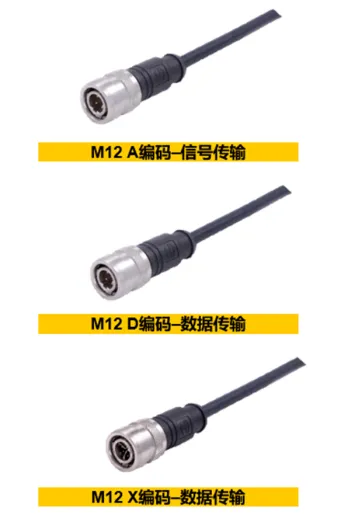
In densely automated production lines, rail transit systems, and robot joints, engineers often face challenges due to limited visibility and restricted wrench access. HARTING (Booth No.: W3.500) has introduced its M12 PushPull rubber-coated circular connector series, which eliminates the need for torque control associated with traditional threaded connections. Operators simply push or pull to achieve a secure lock. The design provides a clear mechanical tactile feedback sound when fully mated, resolving the risk of disconnection caused by operators being unable to confirm proper alignment due to poor visibility. For applications requiring high-power transmission, HARTING’s Han® 34HPR VarioShell high-current housing system offers a highly flexible single-core misalignment-proof solution, effectively addressing contact resistance fluctuations in heavy-duty cable transmissions under extreme conditions such as continuous high-frequency vibrations in high-speed trains.
To further deepen exhibitors’ and visitors’ understanding and insights into the connector segment, the exhibition will feature two major connector-themed forums on-site. These forums will focus on cutting-edge industry technologies, market trends, and application innovations, inviting seasoned experts and leading enterprise representatives to share in-depth perspectives.