
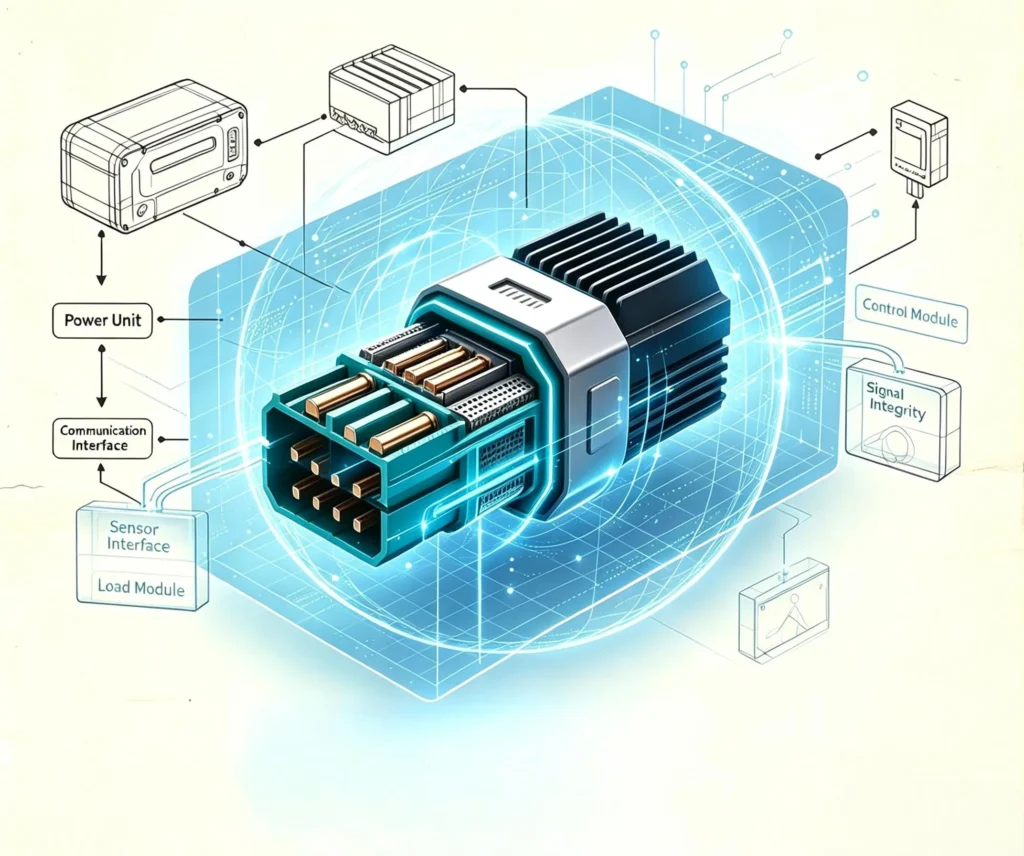
In the first half of 2026, China’s connector industry continued its growth trajectory, but the underlying drivers have fundamentally shifted. AI computing infrastructure and high-voltage platforms for new-energy vehicles are replacing traditional consumer electronics as the strongest and most certain growth engines in the sector.
A systematic review by International Cable & Connection of the mid-year reports from 32 publicly listed connector companies in China revealed that the industry overall exhibits characteristics of “overall volume expansion, structural divergence, and concentrated growth.” Companies achieving dual growth (revenue and profit) are emerging as key growth poles, those with single growth face transformational pain, while those experiencing dual declines are accelerating their exit.
01
Industry Overview: Revenue Expansion, Profit Compression
In the first half of 2026, the combined revenue of the 32 connector companies continued to expand, with an average revenue growth rate of approximately 14%. However, average net profit growth was only around 10%, meaning profit growth lagged behind revenue growth. The industry has entered a new phase marked by “upward momentum coexisting with profit pressure.”
During this period, the average revenue of the 32 companies increased by about 15% year-on-year. However, profitability faced significant pressure – 20 companies reported year-on-year declines in net profit attributable to shareholders, and six incurred losses. The industry is thus entering a stage where market conditions improve alongside tightening profit margins.
The core drivers of change manifest across several dimensions:
First, the growth engine has shifted. Momentum is moving away from consumer electronics toward two main trends: “high-speed” and “high-voltage.” Global telecom and data communication applications have ranked top among end markets for four consecutive years. In China, automotive connectors reached RMB 67.443 billion in 2025 and are projected to reach RMB 71.32 billion in 2026. On the high-speed side, domestic automotive high-speed connectors are expected to grow at a CAGR of 24.8% between 2022 and 2027, reaching RMB 39.056 billion by 2027. On the high-voltage side, the market stood at approximately RMB 34.417 billion in 2025, accounting for 55.16% of total automotive connectors (data from Bishop & Associates, Zhiyan Consulting, and Guolian Securities).
Second, traditional business segments are under pressure. Growth in traditional strength areas such as consumer electronics, small home appliances, and general-purpose connectors remains weak. Intensified competition and pricing pressures continue to erode profit margins. Companies heavily reliant on these legacy businesses now face triple challenges: shrinking gross margins, unstable order volumes, and the need to restructure production capacity.
Third, cost and exchange rate pressures are intensifying. A weakening U.S. dollar has significantly increased foreign exchange losses for export-oriented firms. For example, financial expenses surged by 2,662% at TELINK Technology, 854% at Kua Ke Electronics, and 856% at Xingrui Technology. Compounded by persistently high raw material prices, cyclical fluctuations in defense-related orders, and substantial upfront investments in new ventures, profit margins have been further compressed.
02
Dual-Growth Companies: Industry Growth Poles Are Emerging
Among the 32 sample companies, 10 achieved simultaneous growth in both revenue and net profit. These firms constitute the industry’s “growth poles” – the 10 dual-growth companies posted an average year-on-year revenue increase of about 28% and an average year-on-year net profit increase of approximately 98% (with low base effects from Jin Xin Nuo and Yidong Electronics inflating the average).
The common success factors among these dual-growth companies can be summarized into three points:
First, precise market positioning. They are focused on two major directions: high-speed connectors driven by AI computing power and high-voltage connectors powered by 800V vehicle platforms. Luxshare Precision and Dingtong Technology benefited from surging demand for AI servers; Shenglan Co., Ltd. and Zhucheng Technology gained traction from upgrades in new-energy vehicle high-voltage architectures.
Second, strong technological barriers. These companies have built competitive advantages in signal integrity design, thermal management optimization, and precision manufacturing. Firms with solid technical moats enjoy greater profit stability, along with more stable order flows and stronger pricing power.
Third, successful integration into the core supply chains of leading customers. Luxshare Precision has entered NVIDIA’s AI server supply chain, while Huafeng Technology has achieved breakthroughs in high-speed backplane connectors. Once integrated into core Tier 1 suppliers or OEM partnerships, this signals at least a three-year period of stable volume growth.
03
Single-Growth Companies: Expansion and Profit Pressure Coexist
Against the backdrop of industrial upgrading and market cycles, single-growth companies exhibit two distinct characteristics: “revenue up but profit down” and “profit up but revenue down,” reflecting the operational realities of firms at different strategic stages.
△ Revenue Up But Profit Down: A Direct Manifestation of Transformation Pain
Common traits among these companies include:
Pressure on gross margins from traditional businesses coinciding with the investment phase of new ventures. Some companies primarily focused on consumer electronics connectors have maintained revenue through market expansion, but intense price competition and rising upstream material costs have severely eroded profitability. Meanwhile, their forward-looking investments in emerging sectors such as new energy vehicles, high-speed server connectors, and energy storage are still in the “high investment, slow return” development stage, resulting in short-term financial gaps.
△ Profit Up But Revenue Down: The Outcome of Strategic Adjustment and Efficiency Gains
Companies in this category share the following features:
Revenue decline does not reflect weakened competitiveness; it is often due to deliberate strategic contraction or customer cycle fluctuations. Profit improvement stems from cost control, asset disposals, or one-time gains. These firms are currently undergoing adjustment, and future focus should be placed on the recovery of their core business profitability.
04
Double-Drop Companies: Traditional Business Under Pressure, Exit Accelerates
As the connector industry collectively upgrades toward higher voltage, higher speed, and system integration, some companies face severe challenges due to delayed transformation or an over-reliance on traditional products.
Common characteristics of double-drop companies include:
High dependence on traditional businesses or being in the transition phase between old and new operations, all under pressure from rising raw material prices, exchange rate volatility, and rigid cost increases. The current “double drop” is not a sign of industry decline but rather an inevitable cleansing process amid industry value restructuring.
Companies with highly homogenized products and low technological barriers will face significant pressure when unable to keep pace with growing demand for high-end solutions. With continued deepening of the two major trends – AI computing power and high-voltage electrification – the exit pace for double-drop companies is expected to accelerate further.
05
Industry Trend: From Volume-Price Growth to Ecosystem Dominance
By analyzing the half-year reports of 32 listed connector companies, it becomes clear that the engine driving industry growth has shifted from the past model of “simultaneous volume and price increase” to value leapfrogging driven by cutting-edge technologies.
01
AI and 800V are reshaping the value chain.
On the high-speed side, AI server iteration is the core driver: data center transmission rates are evolving from 400G/800G to 1.6T, pushing single-channel speeds of high-speed I/O connectors toward 112Gbps and even 224Gbps, directly driving growth in both volume and pricing. Dingtong Technology has achieved dual gains in volume and profit by meeting the demand for 112G high-speed communication connectors in AI data centers; Huafeng Technology’s breakthrough in 56G/112G high-speed backplane connectors marks the capability of domestic companies to compete on equal footing with global giants.
On the high-voltage side, the 800V high-voltage platform in electric vehicles is becoming standard, not only increasing the value of high-voltage connectors per vehicle but also raising demands for product voltage resistance, current-carrying capacity, and safety performance – benefiting companies such as Yilian Technology, Ruike Da, and Shenglan Shares.
02
From Components to Solutions
Leading companies are no longer content with selling standalone connectors; instead, they are actively transitioning toward providing system-level interconnect solutions, which has become a key factor in building competitive moats. In the AI server sector, companies need to offer comprehensive interconnect solutions covering high-speed backplanes, cable assemblies, and even CPU sockets. In the new energy vehicle sector, top suppliers are integrating high-voltage connectors, wiring harnesses, and busbars to deliver complete electrical system solutions for battery packs, significantly enhancing customer stickiness.
03
M&A and Domestic Substitution Enter a New Phase
In the first half of 2026, industry consolidation accelerated significantly with Shinyang Electronics merging with Guolian Electronics, Yidong Electronics acquiring Guanding Metal, and Zhucheng Technology taking control of Ruison Electronics. Against a backdrop of intensifying competition and rapid technological evolution, connector industry mergers and acquisitions are expected to become more frequent over the next two years, further increasing market concentration.
Meanwhile, domestic substitution has expanded beyond consumer electronics connectors into high-barrier segments such as high-speed backplane connectors and CPU sockets. Breakthroughs by Huafeng Technology in 56G/112G high-speed backplane connectors and Luxshare Precision’s strong positioning in AI server interconnect solutions demonstrate that Chinese companies now possess the capability to compete on equal footing with global giants. In the next phase, domestic substitution will be driven less by cost advantages and more by technological differentiation.
Conclusion
The 2026 mid-year report shows that industry growth is shifting from “rising tides lift all boats” to “the strong get stronger.”
The next three years will be a decisive turning point, with the outcome entirely determined by companies’ core technological advantages in “high-speed signal transmission” and “high-voltage, high-current power handling.” Enterprises unable to elevate individual technologies into system-level solutions will accelerate their exit during this brutal reshuffling of the supply chain.
Over the next three years, what determines a company’s ranking will no longer be production scale, but rather its technological edge in “high-speed signal transmission capability” and “high-voltage power processing capability,” as well as its ability to transform these advantages into comprehensive system solutions. The connector industry has fully entered an era defined by technological and customer barriers.